Monday, April 03, 2006

The Unmanned Aerial Vehicle - The Cypher

U0205109 Wu Jinjia

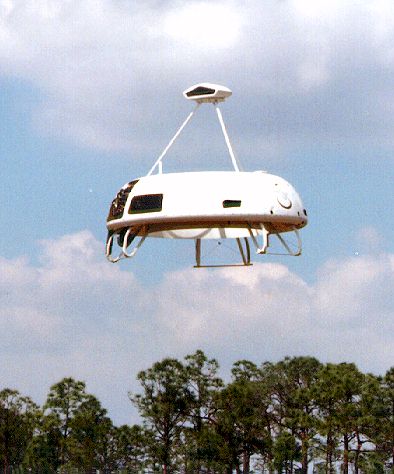
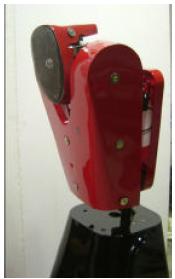
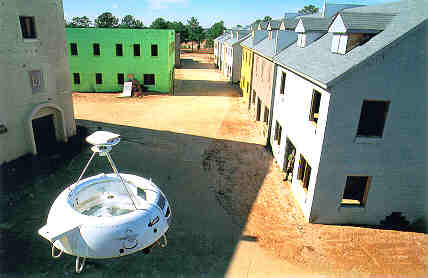
The Cypher is a remote control helicopter for military surveillance. This Unmanned Aerial Vehicle (UAV) is 6.5 ft diameter. It has hover capability and can endure three hours of flight when powered by a 50-horsepower class engine. It can even land on slopes of as much as 15 degrees. The Cypher can operate autonomously according to preplanned mission scenario. It is able to fly “hands-off” instead of being flown directly by a ground operator. It has the following autonomous flight modes:

  • auto take-off and landing
  • position hover-hold
  • altitude hold
  • velocity hold
  • waypoint navigation
  • auto return home

The Cypher operates on ducted rotors incorporated with composite structures. The enclosed rotor concept is safer than exposed UAV rotor systems as it minimizes the hazard of exposed high speed blades to ground personnel. The composite structures include the bearingless rotors, fly-by-wire flight controls, and advanced avionics. It is easy to operate and utilizes a centralized computer, called the vehicle mission processor, for execution of flight control laws, vehicle management functions, navigational computations, flight payload management and air vehicle communications. The rotors and the circular shroud surrounding them will share in providing the lift. It combines the efficiency of a ducted air stream with a coaxial advancing blade concept rotor system The Cypher determines position and navigates using a Global Positioning System. The vehicle is controlled and monitored from an integrated mobile ground station. The entire mission can be planned, executed and monitored from a single system manager display. Vehicle and payload commands, from the system manager, are relayed to the aircraft via a digital telemetry uplink. Aircraft status, mission data, test data and payload video are merged into a single data downlink signal that is transmitted to the control van. The underground control is done through a datalink. The Cypher has numerous flight demonstrations in both military and civil applications. They include ground and naval surveillance, communication relay, countermeasures missions as well as such non-defense roles as counter-narcotics, ordnance disposal, forestry, utilities, law enforcement and search and rescue. In a demonstration at the Military Operations in Urban Terrain (MOUT) site at Fort Benning, Ga., Cypher flew down streets, landed on a building's roof and strategically placed different payloads. For the U.S. Army's Autonomous Rotorcraft Testbed (ASRT) program, Cypher – with no operator input – searched and tracked man-size targets. For the U.S. Department of Energy, Cypher used magnetometers to search and locate underground structures and tunnels in Nevada. In September 1997, Cypher flew at the Army's Force Protection Equipment Demonstration in Virginia. So far this air vehicle has already accumulated about 400 flight hours at Sikorsky’s Development flight Centre.

References:

http://cache.ucr.edu/~currie/roboadam.htm http://www.globalsecurity.org/intell/systems/cypher.htm

Sunday, April 02, 2006

Road Cracks Sealing Robot

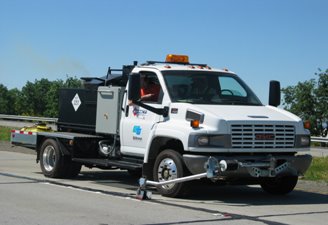
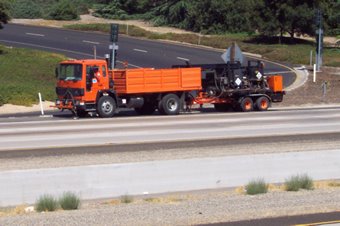
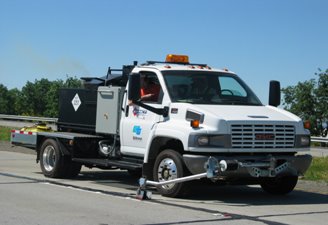
U0307717 Chew Jian Qiang To all fellow drivers/passengers, have you ever been stuck in a traffic jam so long that your bottom aches, you nearly concussed from Carbon Monoxide inhalation or you wish you had some magic to shrink all the other cars and roll over them? And the traffic jam was due to a lane closure for road repair, which lasted a few days. If the road was not repaired, then there might be no road to repair! Well, Advanced Highway Maintenance and Construction Technology(AHMCT) has the solution to those very annoying road repairs lasting a whole day. But before that, I shall state the perils of road repairs. Everyday, workers lay their lives on the road by manually repairing the cracked road, seperated by less than 1.5m between traffic speeding at 90kmh (sometimes much higher). All it needs is a moment of distraction, or a drunked driver, to claim that life. And it is not only for a day. Manual road repairs require a lot of time, and may drag on a few days for the same stretch of highway. More time spent on road = more chance of workers hit by speeding cars. Enter the Transfer Tank Longitudinal Sealer (TTLS). --> This is an evolved version of the Longitudinal Crack Sealing Machine (LCSM). (Below) This machine consists of a long robotic arm equipped with visual sensors, which sends information to the driver. The operator can then, from the comfort and safety (and aircon) of his seat, communicate with the machine through a simple user interface. The operator just needs to position the arm over a crack on the road, and the machine will take care of the rest. The arm will then take over, tracing and sealing the fissure on its own while the driver drives alongside it, monitoring the activity from the safe confines of a large truck. Another machine is the Operator Controlled Crack Sealing Machine (OCCSM).

How It Works:

Sealing A special sealant applicator that deploys a pressurized reservoir is developed to allow for high speed sealing operations and automation. This means, a reservoir of sealant is place over the crack, and then pressure is applied to ensure that the sealant moves to fill up the crack. Since the sealant reservoir must be kept at a constant level (so as to fill up the crack regardless of the crack depth and width), the sealant pump output is regulated with a reservoir level feedback controller constantly maintaining the set reservoir level regardless of crack demand. This application technique has proved to be successful, completely filling up cracks at a speed of 8km/h. Vision System As stated, there were visual sensors on the robotic arm. This provides real-time images of the workspace for crack detection and path planning. The images are routed to the operator, where he will be able to get them by simply opening a browser (not unlike your internet browser). Motion and I/O Control System

The motion control system handles the two-axis (R-θ) motion of the telescopic arm. This node of the distributed control network is a stand-alone 2-axis motion controller with a built-in 100 Mbps fast Ethernet port. The I/O subsystem controls the pump of the sealent melter, the heaters, and the sealent head lever. It is also a stand-alone controller with 100Mbps ethernet port. Unlike the motion controller which can store and execute customer programs, the I/O controller uses a memory map for customizing temperature alarms and events which are used to control the heaters, and customizing a PID loop to control the pump proportional to the head level. All these critical tasks are conducted by the controller and real-time is ensured.

User Interface

Programmed in Visual C++, the user interface can be run on any PC, provided ethernet/Wi-Fi connection is available. The software is developed such that it is object-oriented and multithreaded, which makes the graphical interface rich in features (required by complex systems such as this), and always responsive (important for real-time control). This user interface allows the operator to perform all controls to the machine.

Path Planning

The graphical interface makes path planning interactive and allows many other functions. The operator can choose from a whole list of methods for finding the path. He can even combine the methods, and such flexibility allows the him to find the path for virtually any crack, effectively and accurately. Since fully automated crack recognition is time-consuming and not dependable, the operator can interfere and point out the start and end of the crack, avoiding the necessity to scan the whole image. A C++ program makes use of this to find the entire crack, only the start and end points of the cracks are needed as inputs. Raw paths from free hand and some other planning methods are normally not smooth which can result in jerky motions by the telescopic arm (for sealing). These jerky motions will lead to rough seals. The system encompasses curve fitting to smoothen out the edges. Nice.

Control Panel
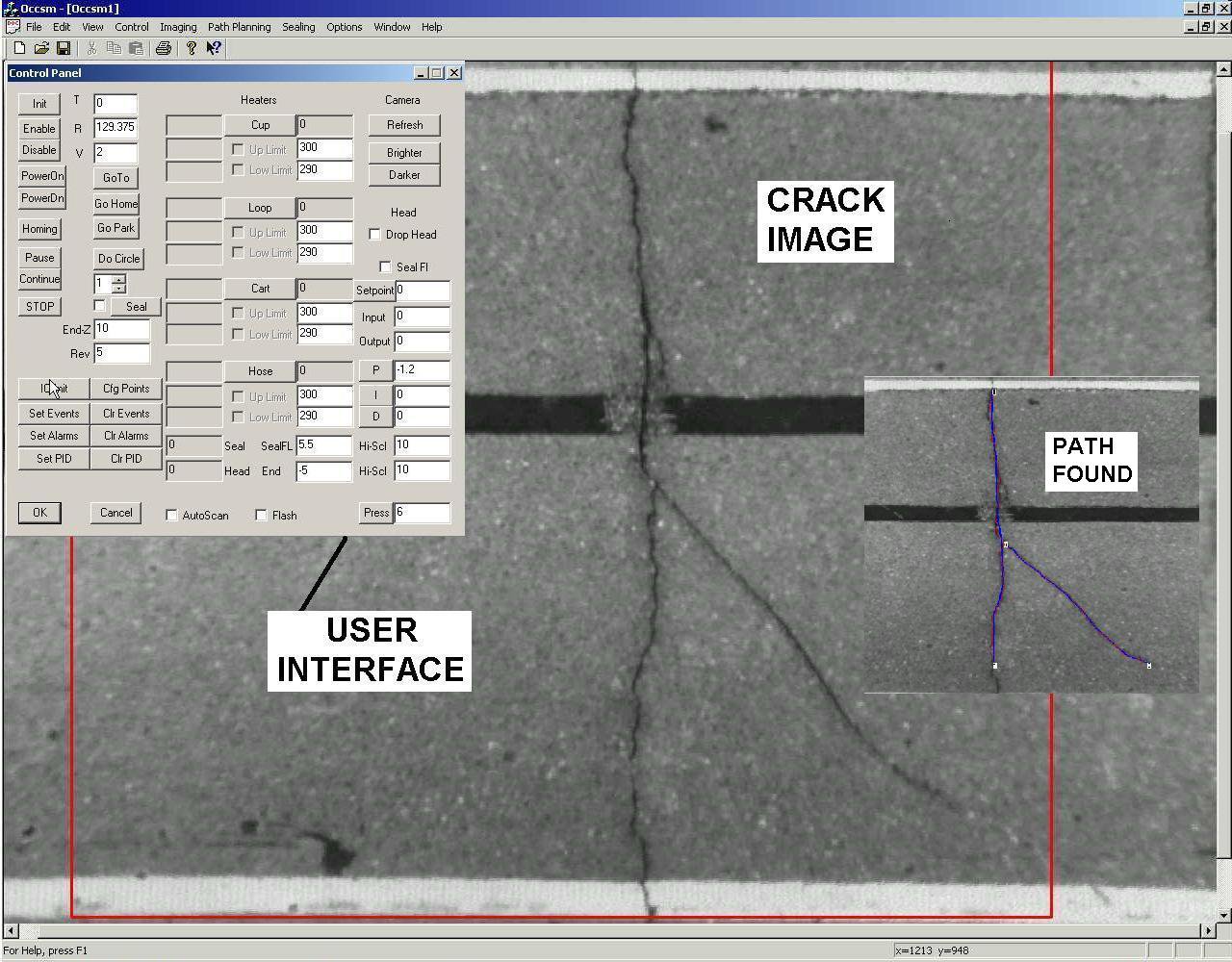
The control panel is a modeless dialog box, meaning it is always on screen, but permits other user activites on the main window. Because of this, the operator can control and monitor the system within the control panel and do other things such as path planning within the main window. The entire user interface is always unblocked (top of screen), so the operator always has control of the system. This is very important for real-time control programming. In cases of emergencies, it is of utmost importance that the operation can be stopped immediately, especially when the machine is working adjacent to traffic.

Conclusion

The implementation of the cracks sealing robots has proved beneficial. I don't think such technology is in use in Singapore yet. However, from the statistics, this will prove much more efficient and cheaper (and less annoyance to road users) in the long run.

Statistics: (LCSM vs Manual)

No of employees: 3(LCSM), 4(Manual)

Avg miles/day: 3.5(LCSM), 0.8(Manual)

Bare Rate Cost: $4017(LCSM), $23820(Manual)

Road Closures: No(LCSM), Yes(Manual)

Employees on foot?: No(LCSM), Yes(Manual)

I hope someone from LTA reads this and use this wonderful system to alleviate the sufferings of motorists. Haha. Save $$, Save Time, Save Lives. How wonderful is that!

References:

http://www.ahmct.ucdavis.edu/index.htm?pg=HomePage

http://www.its.berkeley.edu/itsreview/ITSReviewonline/spring2003/trb2003/bennett.pdf

http://www.wired.com/news/technology/0,1282,48196,00.html
Insect in Exploration

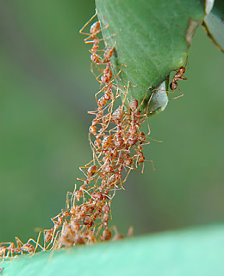
U0204593 Chiam Lee Chuan “AN ARMY of 1000 millimetre-scale robots capable of exploration and inspection work in hazardous environments is to be built under a €4.4 million European project. The I-SWARM (Intelligent Small World Autonomous Robots for Micro-manipulation) project, which is coordinated by Jörg Seyfried of the University of Karlsruhe in Germany, will involve 10 European universities. The bots will probably consist of a microchip with six or eight legs. They will get power from solar cells and communicate with their comrades via infrared or radio links. This should allow them to be sent into small or dangerous spaces to inspect equipment for signs of damage. A team of entomologists from the University of Graz in Austria will provide advice on ways to mimic insect communication. The researchers hope to have prototypes capable of pushing small objects around by mid-2006.” Quoted: NewScientist.com news service, 24 September 2005 The above mentioned project is actually a research field in which Biomimetics can be applied in the area of explorations. Biomimetics, though is a relatively new word, is a term used for those engineering systems that make use of traits observed in biology especially the behavioral patterns of insects. In recent years, scientists are studying how insects walk, fly and navigate their ways around obstacles to develop super, tiny robots that could led in the advances of biomimetics robotics. Perhaps some of us are not alien to the biomimetics term as the concepts have already been featured in science fiction works, from the ever-complaining Marvin in Hitchhiker’s Guide to the Galaxy to the murderous nanomachines in Michael Crichton’s Prey. Scientific researches are now focusing its attention on gathering answers to how insect can function in such exquisite ways. How does a fly manouever with such precision, a bee find its way from flower to hive or a cockroach move so quickly? At the same time, the swarming behaviour of ants, bees, termites and other social insects has implications far beyond the hive. Modeling the swarm behaviour provides researchers with new conceptual frameworks for extending the field of artificial intelligence and suggests new possibilities for computer hardware and software design. Why mimic insects and its swarming behaviour for exploration purposes? Using insects to model our robots held several advantages over the current convectional built-for-exploration robots. One of the greatest strength of insect robots is its locomotion and miniature size. Using cockroach as an example, it is shaped in such a way that both speed and stability can be achieved during movement over uneven surfaces. The secret lies in the self-stablising posture, achieved through a low centre of mass located toward the rear of the animal and by a wide base support and a thrusting leg function in which the legs acts mainly as thruster rather than striders, launching the insect forward. In flight, we marvel at the extraordinary maneuver ability of the bee.An engineer once calculated, infamous, that an aeroplane with proportionally the same weight and wing size would never get off the ground. To defy the steady-state principles of aeronautics, the bee uses a combination of three aerodynamics techniques to fly and to perform their astounding aerobatics. In exploration, one of the utmost important areas is navigation. In nature, one of the best navigators around is the bee. From the detail studies of the Australian scientists, we now know that the bee uses the sun as a compass for flight direction. At the same time, it stores the information of the places it has been to and recalls this on their return flight by making connections between the landmarks and the hives. Another important strategy we can adapt from insects behaviour is the goal-achieving method of a purely-bottom up approach with no central command and control structure. A swarm of termites for example exhibits a collective intelligence that far exceeds the intelligence of any individual termites. There is no big “boss” in charge and no individual insect grasps the big picture. Yet, it can accomplish a collective goal that best serve the interest of the community. For exploration, such decentralized system might be more suitable that a centralized one in terms of robustness and flexibility. The loss of a multi-billions exploration project would be minimum if the communication link of an agent in a multi-agents system is lost as compared to the single centralized agent system. Already, there are researching groups planning and implementing robotics insect for explorations. Notably, the NASA is exploring the idea of having 10,000 electronic-mechanical bugs with four to six legs of the size of a large beetle on a distant planet. Each tiny bug will be fitted with sensors and cameras to relay information back to earth. Piezoelectric ceramic technology is used for efficient power generation. Currently, each prototype cost $100 but a mass-produced bug should only cost as little as $10. While there are still plenty of issues to be ironed out, the depth and scope of planet exploration is more promising than the convectional strategies. In another gound-breaking project, Dr. K.M. Isaac, professor of aerospace engineering at UMR, is working with NASA, The Ohio Aerospace Institute (OAI) and Georgia Institute of Technology to create a robotic flying machine called an Entomopter. The mechanical insect, capable of crawling as well as flying, will be able to study, videotape, photograph, and gather other types of information about planets, specifically Mars, closer than any current technology, “Scientists hope to send these robotic bugs to Mars by the end of the decade”, he adds. This technology is not only applicable to space exploration, but also to disaster-struck areas like unclear accident. In deep-sea exploration, NASA's Institute for Advanced Concepts (NIAC), are coming up with this new idea of robo-swimmers which models after a seahorse. In this case, seahorse is chosen as it can swim against ocean currents and use their tails to grab on to something and remain stationary. While we have seen many of these ideas in fiction books and movies, the potential of exploration-designed mechanical bugs fitted with sensors and cameras is certainly very real. Who knows someday we will might be looking at Mars from the eyes of a bug. Reference: http://www.spacedaily.com/news/mars-robot-02b.html http://www.cis.plym.ac.uk/cis/InsectRobotics/Applications.htm http://www.science.org.au/nova/084/084key.htm

Rehab Robots at your service..

U0206727 – Rajen Suchede Right.. Before I kick off into the actual robots discussed in this blog, let me try shedding some light into the two themes core to this article – rehabilitation and robotics. As defined by the Oxford dictionary, rehabilitation is an activity which aims to enable a disabled person to reach an optimum mental, physical, and/or social functional level. A robot (yeah, we all know what it is but do we know how the Oxford dictionary defines it!) is a mechanical device that sometimes resembles a human and is capable of performing a variety of often complex human tasks on command or by being programmed in advance. Hence rehabilitation robotics deals with advancing robotics technology to provide the physically disabled people with tools to improve their quality of life and productivity of work. Traditional industrial robots have always been programmed to follow a particular structure and sequence to accomplish a series of repetitive tasks. An example of such robots are those used in car manufacturing which need to do the exact same thing for every car each time, without any dynamic change in control. However, rehab robots require a lot more than being programmed to do a series of step-by-step tasks since we have an actual man–machine interaction. This poses a difficult challenge to the designers since these robots should now be able to interact with “anyone” and be dynamic enough to adapt to each different individual. Moreover, while designing such robots we need to keep the safety aspect in mind. Hence, there is not much point in preprogramming these robots. What is needed is an increased amount of sensors to guide the robot and increase their performance and develop separate devices to control the robots. What’s more difficult now is that these devices should be operable by the people in rehab. Hence most designers work at rehab centers so they can test if the rehab patients are able to properly grasp and control the robots. Right, moving on to the actual robot I intend to discuss in this blog – WALKY. There have been a lot of robots that were developed to help disabled people in the office environment. However, what they didn’t realize is that people with disabilities are neither interested nor competent in administrative work. The WALKY is designed for help the disabled in a laboratory environment. In the lab, this robot can be used to carry out the mechanical tasks such as moving test tubes etc, leaving the more qualitative for the people to perform. This same robot can use many individuals working in adjacent locations to perform the same tasks. Have a look below and you’ll get a better idea: I personally feel that WALKY has a great future as an assistive device for people with disabilities. The possibilities are infinite. Forget for a moment that it was developed for use in a laboratory environment. Tweaking the codes a bit, we can use this same robot at home say help out with chores at the kitchen, opening the refrigerator and getting you a drink. What would make an interesting discussion is what price can one pay for such an assistive device and thinking of ways to making the most out of it. Leave your comments.. References: [1] “WALKY – Mobile robot system for rehabilitation”, Gunnar Bolmsjo, Online: http://www.robotics.lu.se/publications/1995/bolmsjo95b/HTML/node10.html [2] “Sesor-based navigating mobile robots for people with disabilities”, Hakan Neveryd, Center fir Rehabilitation Research pp. 1-84.
Robot for the removal of brain tumours

U0307654 Lian Weiwen, Mervyn

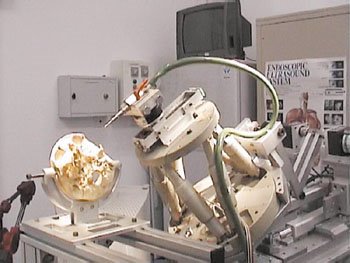
Currently in the medical field, skull surgery to remove brain tumour is a delicate and tedious operation that lasts for an average of 9 hours. It requires 6 hours to drill through the skull and 3 hours to remove the tumour. Moreover, such tumours can be extremely invasive. Thus, their removal is extremely complicated. Furthermore, there may be a need to drill through the temporal bone which is porous and not solid. This increases the complexity of the surgery. Lastly, if the surgeon damages sensitive areas (like the inner ear and facial nerves) of the patient during surgery, it may lead to permanent distortions of the facial features of the patient. Therefore, doctors in this field face a lot of difficulty in performing these operations. (Picture from http://it.asia1.com.sg/specials/spotlight20030108_004.html) However, a robot has provided an answer for them! In a joint collaboration between the department of mechanical and production engineering of NTU and the National Neuroscience Institute (NNI), Singapore experts have designed what is believed to be the first robot that is capable of drilling through the temporal bone to remove tumours during surgery. In addition, it is also capable of drilling through the other parts of the skull to remove deep-seated brain tumours. The six-legged computer controlled robot is called Hexapod. With its advent, it is able to shorten operation time to 50 percent. Furthermore, it is also capable of higher precision drills on the skull of the patient. This has translated to a saving in time and an increase in precision. Before the operation, high-resolution magnetic resonance imaging (MRI) scans are done on the patient to obtain information on the location of the sensitive areas of the patient. Such locations vary from patient to patient, so the path that the robot has to take to reach the tumour differs from patient to patient. After this information is obtained, the information is loaded onto a computer to determine the best route to reach the tumour. This route has to avoid the sensitive areas of the patient and has also got to be the shortest route. Next, the robot has to be programmed to take the route that has been planned for it. This program is written on a Linux platform. Besides these, the computer connected to the robot is capable of being preloaded with information obtained from the MRI scans to do a simulation of the actual surgery. This means that there will be greater safety in the procedure because the simulation can be run first and errors can be spotted before the actual surgery. Lastly, the surgeon places physical markers on the patient’s head to guide the robot during the surgery. Currently, trials have been successfully completed on cadavers and trials are being done on animals. In the technology used, there is a high level of accuracy involved. Thus, there is a need to ensure that the control circuitry has to be extremely precise. The controllers have to be well-tuned for movement of the robot and the drilling process. It appears that in this application, the concepts of locomotion and obstacle avoidance have been implemented to enable the robot to avoid the sensitive areas and to move towards its goal, the tumour. In this robot, there seems to be little autonomy. However, this is understandable because in medical applications, if the patient has to pay a high price due to a bug in the software, it would be disastrous. It would have a severe implication on the field of robotics as critics would jump at the opportunity to argue against further research in such a field. Moreover, the feedback from the sensors given to the doctors operating the robot ensures a greater amount of safety in the procedure being performed. Clearly, this robot is a boon to mankind in the field of medical applications. It has helped us to save time and effort. In addition, it has given us greater confidence in executing intricate and delicate medical procedures. Indeed, humans deserve better!

References: 1. http://it.asia1.com.sg/specials/spotlight20030108_004.html 2. http://virtualtrials.com/news3.cfm?item=1879 3. http://www.theage.com.au/articles/2003/01/15/1042520663224.html 4. http://www.smh.com.au/articles/2003/01/15/1042520673704.html

Do you want to buy a home robot?

U0204569 Tan Wen Pin
.
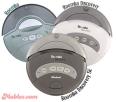
. Dread doing the housework after a hard day at work? Is the floor dusty and the carpet smells musky? The solution is here! Join over 1.2 million Roomba owners who have discovered the smarter way to clean. Get a Roomba 4230! At only USD$329, you can programmed Roomba to vacuum your floor and clean your area anytime including the time you go to sleep or go to work! Roomba has a low-profile design that fits under your bed, sofas, and other tight spots where conventional vacuums can’t reach; guaranteeing you a more automated cleaning experiences ever! With sensors, an close feedback loop to the processor controls the movement! Watch the demonstration in the link provided!
.
.
Be surprised by the robot’s intelligence! Its sensors can navigate between walls and furniture legs and adjust for carpet, tile, and wood floors. Be surprised by its virtual wall mechanism that can establish invisible perimeters for vacuuming specific zones by using well defined sensors and internal "area-specifying" algorithms. Fully battery powered, the docking station is easily accessible by the Roomba with a click of the finger. With Roomba, indoor household chores now become a breeze!
.
.
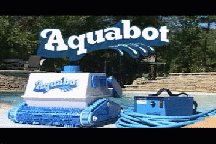
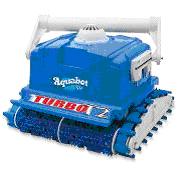
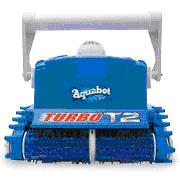
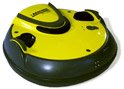
Now what happens if the swimming pool walls get dirty? Get AquaBot! AquaBot is a robotic pool cleaner that scrubs, vacuums and filters any pool in length from floor to waster line. Using an complete computer guidance system to systematically move around the pool, power water jets and rotating scrubbing brushes loosen debris on surfaces down to two microns, 1/50th the width of a human hair. The filters’ large capacity and microscopic cleaning capabilities results in a healthier pool with fewer bag changes and less backwashing. The cleaner can be set to run autonomously, controlled by routine movement instructions by a mini processor. By simply looping of movement instructions, the robot coordinates between its wheels, scrubbing action and clearing actions. A customizable digital timer also allows you to personalize the clearing schedule. For a limited time only, it is now going at USD$1499. If you produce NUS matriculation card, you will get 90% off. OK, just joking.
.
.
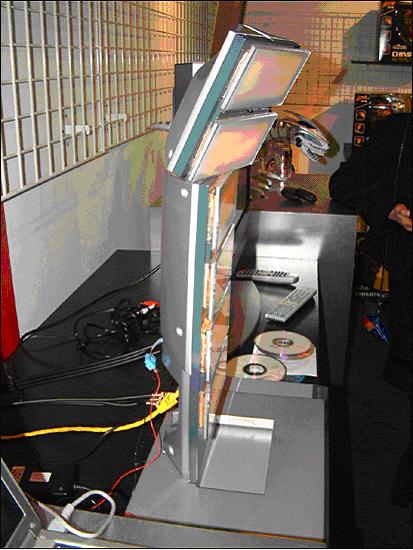
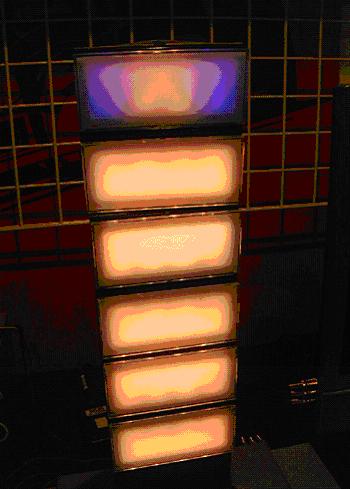
Enough for all the cleaning, its time for rest and relax! Get our SCOTY which stands for Smart Companion Operating Technology. Alright, our robot here does not clean, nor does it walk, roll, or make disgusting noises but it greets you, read your email aloud and even play your favourite tune! Standing at two feet tall, it consists of ABS plastic metal frame with a series of illuminated rectangular panels. The two uppermost panels are articulated so that the integrated camera can watch every angel of the room. Built as part of a joint venture with Philips Electronics, SCOTY is designed to be intelligent media hub. Although it has little internal intelligence inside its metal body, it relies mainly on connected PC software. The software provides facial recognition, text-to-speech and media management. By industrial pre-programming "speeches" and "words", SCOTY becomes an articulate piece of masterpiece by matching the word to its database. Anytime you need a piece of music, or want the stock updates, and you are too lazy to get up from that crouch, just “ask” SCOTY and it will read out for you ! Double up as a remote babysitter and surveillance unit. It can scan a room and detect human faces through face recognition software. It even sends an image captured with its video camera and capture video at 10 frames per second. All of the above at the price of USD$399 (Excluding PC)! What are you waiting for! .
.
Be prepared to be amazed by our technology gadgets! Embrace technology! If you do not keep up the pace, you will be thrown behind! Do not be afraid of the fast pace of technology advancement, remember that the ultimate aim is to bring about greater convenience and automation for you, a human!
.
.

Saturday, April 01, 2006

Valerie the Domestic Android

u0300510 Chen Yanchang Domestic robots have already entered the market and they help in doing mundane household chores like vacuum cleaning, ironing of clothes and even home security. But despite their usefulness they are rarely humanoid in apperance. These include the disc-shaped vacuum cleaning robot Roomba by iRobot, or the Dressman by Siemens which is a mannequin-shaped robot with balloon silk skin that inflates itself with hot air and presses clothes, or the Aibo, the “dog” by Sony which functions as a family pet while guarding the house with a .3 megapixel camera to snap intruders. Some domestic humanoids that have been developed so far include Asimo by Honda and Wakamaru by Mitsubishi Heavy Industries. However, Chris Willis of Androidworld.com is working on a prototype domestic android named Valerie. Androids are robots which have been designed to look and behave like humans. Thus, they are not only bi-pedal but also talk and look like humans. Valerie has been promised to be able to clean the house, change the light bulbs, and wash the clothes and also do dishes. She can even check the sports scores, book plane tickets and even notify the police during emergencies. Valerie has been designed to speak English and Willis promises that she will be able to understand English as well. That means that she can be programmed by non-programmers without knowledge of programming languages. The expected cost of Valerie is US $59,000 plus a 2 year warranty. In terms of locomotion, Valerie may just be the most advanced to be shown in public. With 40 degrees of freedom in its entire body, it is comparable to Honda’s Asimo with only 30 degrees of freedom in it entire body. Of the entire body, Willis the movement of the hands themselves make up to 30% of the project because of the complex tasks that Willis expects Valerie to perform. Pictures and development of hands and other parts can be found in http://www.androidworld.com. Bi-pedal movement is another challenge that Willis is confident that Valerie can overcome through the use of a vision system, a gyro accelerometer board and the sense of touch in the feet. In comparison, Valerie has 30 force sensors in each feet compared to Asimo with 6. Willis thinks that the key to walking is by increasing mobility in the pelvic region.

Admittedly the project is extremely ambitious and there are many problems However, it is interesting to note that Willis has already sold 3 prototypes that were destined for delivery in late 2004. Willis is optimistic of being a major player in this futuristic technology that has been invested heavily by the likes of names like Honda, Fujitsu, Sony, Toyota, Takara, Omron, sega, bandai, NEC, Mitsubishi, Kawasaki, Tsmuck, Sanyo and Epson. The website http://www.androidworld.com/prod19.htm shows the progress of the Valerie Project and discusses the technology that is used in Valerie’s android capabilities. For speech, the AT&T speech synthesizer which is the website claims to be the most human-sounding voice available today is used. This can be tested by going to the website http://public.research.att.com/~ttsweb/tts/demo.php. In terms of hearing, Valerie has is biaural. Vision, is colour binocular and uses the PC207XP Color Microvideo CMOS Camera from Supercircuits at http://www.supercircuits.com/. More information on the android eyes can be found at http://www.androidworld.com/prod31.htm.

For artificial intelligence, the domestic android will be using the following learning methods Rote memory, visual imitation, Logical inference, Fuzzy logic, and Neural networks.

In terms of muscular movement the following muscle mechanisms are used: Pneumatics for medium muscles, hydraulics for strong muscles, steppers for small fast muscles and servos for small slow muscles.

All in all, these give Valerie the following capabilities which would make her one of the most advanced domestic robot to date:

- Muscle movements equal to a person. - Understand spoken commands (in several languages) - Speak to you in English (or several other languages) - Remember previous conversations. - Remember a daily list of chores to be done. - Perform household chores such as: - Cleaning - Clearing the table - Changing light bulbs - Doing laundry - Dusting - Lift and carry things up to 50 pounds - Picking up things - Putting things away - Painting - Setting the table - Sweeping - Washing dishes - Vaccuuming - Access the internet to do such things as: - Check stock prices - Check sports scores - Find information for you - Book plane tickets for you - Find addresses or phone numbers - Find directions - Call police in an emergency. - Call the fire department in case of fire. - Dress or undress herself. - Have a sense of touch all over like people do.

Willis is expecting the demand for personal robots to rise over the next 10 years and is keep track of all the 60 or so android projects around the world to stay ahead of the competition. He is expecting as much as 10% of US households to have home robots of some kind. That sure sounds like science fiction becoming reality. Reference http://www.cochrane.org.uk/opinion/articles/17-01-2006.php http://www.gizmag.co.uk/go/2545/ http://www.androidworld.com/prod19.htm

Robot for Home Floor Cleaning

U0205295 Li Lei
The great and rapid spread of electronic and mechatronic technologies in the last decades have led to a massive introduction of technological devices in many aspects of every day life, from vocational activity to hobby and leisure. The introduction of technological devices in personal life and especially in activities at home enables people in need for support to reduce the daily housework.
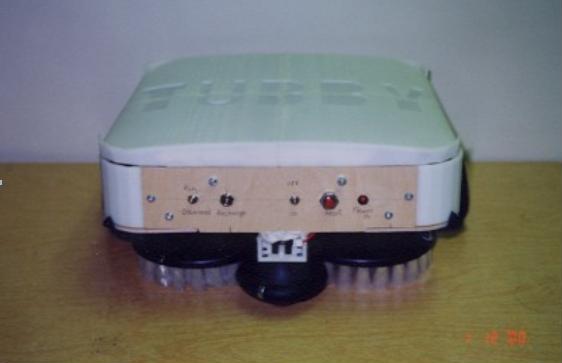
Tubby is an autonomous floor cleaning robot which is designed by Samit Gokhale in university of Florida . It uses two brushes below the robot to sweep the floor as it moves around. Tubby initially follows a wall, cleaning close to the wall, then it performs random movements and avoids obstacles, thus cleaning the entire surface area.
A Motorola 68HC11 microprocessor is used to control the robot. As the robot has to overcome high surface friction, the actuation of the robot is handled exclusively by two 110 oz-in ball bearing servomotors that have been hacked to work as dc motors. The cleaning brushes are driven by two 43.2 oz-in servomotors. A spherical roller supported by roller bearings supports the rear of the platform. All the electronic and mechanical systems are neatly packed in an aesthetically designed platform using CAD modeling software like Pro-Engineering, and manufactured using Fused Deposition Method. Seven IR sensors are mounted on the platform. Three IR sensors are mounted on front and two each are mounted on the side of the platform. Bump switches are also provided on the front of the platform. In addition to these sensors, a special sensor hacked from a color laser printer is used. These sensors provide the robot with data, which is used to perform obstacle avoidance and wall following. As high torque rating servomotors are used, Tubby is able to travel on carpets as well. Tubby initially performs wall following, then travels the surface simultaneously performing obstacle avoidance to cover the entire floor area. During this the two cleaning brushes are continuously rotating using two servomotors. Thus the four servos provide a complete cleaning job of the entire surface area.
Navigation Technology: Navigation methods of the cleaning robot can be considered as follows: (1) Random advance: the robot moves forward until colliding with an obstacle, and if it run against and obstacle, it turns around to the opposite directions of the obstacle and moves forward as in (a). (2) Zigzagging advance: the robot moves forward in a zigzagging form as shown in (b). (3) Rectangular spiral advance: the robot moves forward in a rectangular spiral form as shown in (c). When the robot goes along the wall, it modifies its direction to be parallel the wall. Tubby follows the first navigation method with certain modifications.
Nowadays, many kinds of clean robot have already been sold in the market, like Roomba Pro Elite FloorVac and RC 3000 cleaning Robot. Roomba Pro Elite is the ultimate in automated home floor care. It uses intelligent navigation technology to automatically clean nearly all household floor surfaces without human direction. In addition, a wealth of added features and accessories will give customers more ways to clean, and more ways to store their machine. In future, I believe these kinds of home assistant robots will become more and more popular so that people can spend less time working and more time enjoying their lives, especially for housewives.
References:
Yong-Joo oh and Yoshio Watanabe, “Development of Small Robot for Home Floor Cleaning”, SICE 2002, 3222 - 3223 vol.5

The Childcare Robot PaPeRo

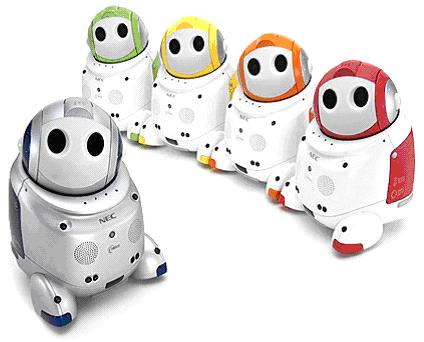
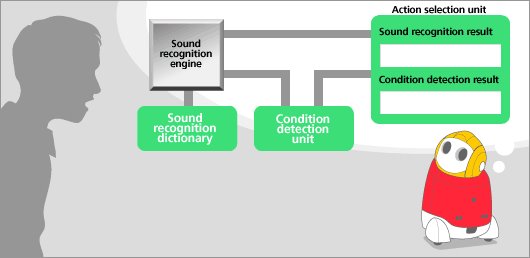
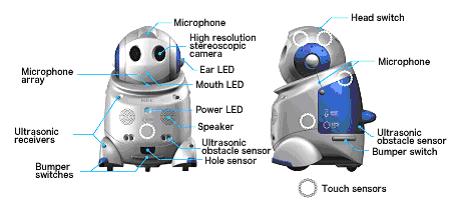
U0204511 Tan Chin Hiong The PaPeRo is a personal robot researched and developed by NEC Corporation. It is aimed at being able to live in the home together with humans and serve as companion to family members. For this reason, a great emphasis is placed on various basic functions that will allow PaPeRo to interact intelligently with people. These include facial recognition, speech recognition, responsive personality, spontaneous suggestions, autonomous actions and user customization. For example, if a person praises PaPeRo for dancing, then it remembers and will perform a dance when it sees the person again. When PaPeRo is not interacting with people, it can engage in autonomous activities such as walking around the house at will, connecting to the Internet and retrieving the latest news, weather reports, nutrition tips or zodiac fortunes. :D The user can also create new dance steps or teach PaPeRo new greeting messages using a visual basic editor. The facial recognition and speech recognition technologies can be found from the PaPeRo website. Here, we discuss how PaPeRo overcomes some difficulties faced by recognition algorithms in actual environments. For PaPeRo to be a personal robot living in a household, it must recognize faces and speech well in actual household environments. For example, the lighting conditions may be too dark, the person may be standing too far away, many people may be talking at the same time or there is too much background noise such as the television or radio. The developers at NEC overcome these problems by using “Conditions Detection Feedback”. In addition to feature recognition, PaPeRo also detects problem conditions in its environment and solves the problematic conditions by interacting with the user. For example, if the person speaks too softly, PaPeRo will detect the lack in audio amplitude and response by saying “Speak more loudly”. Problem solving by “interaction” with the user is an effective method and also adds personality to this personal robot. The Childcare Robot PaPeRo is developed as an extension to the PaPeRo. In addition to the basic features mentioned above, this Childcare Robot is equipped with touch sensors so that even young children can interact with it by touching or patting it. It also has a built-in mobile phone that can utilize TV conferencing features. When a parent calls, PaPeRo will find their child and starts a conversation with him/her. The parent can watch their child playing via PaPeRo’s eyes (CCD camera) and talk to their child using PaPeRo’s speakers and microphones. PaPeRo can serve the role as a home tutor by giving quizzes to the child. The child answers the questions using a special microphone and PaPeRo listens to determine if the answer is correct. A PaPe Sack that contains an ultrasonic transmitter can be worn by the child so that PaPeRo can always locate where the child is. Safety is a major concern when dealing with young children. In order to avoid obstacles and move around safely, PaPeRo makes use of ultrasonic sensors, front cameras and bumper switches. When it detects objects suddenly coming into its path or comes into contact with an object, PaPeRo’s wheel stop instantly to avoid accidents. Moreover, PaPeRo is designed without any projections or gaps where children’s fingers might get pinched. While Childcare Robot PaPeRo offers great potential as a personal childcare assistant, there are still many areas for improvement. PaPeRo should not solely be a playmate for the child. It should also be able to protect the child’s safety and well-being. For example, it should be able to detect dangerous situations such as fire or gas leakage. It should also be able to recognize the child’s state of health (e.g. fever, vomiting, etc) and contact the parent/hospital using its built-in mobile phone and TV conferencing feature during emergencies. This will significantly lighten the workload on busy parents in today’s fast-paced society. PaPeRo's website: http://www.incx.nec.co.jp/robot/english/robotcenter_e.html

Many brains work better than one

U0303270 Quak Yeok Teck Perhaps the concept of robots still linger in the humanoid form in most of our minds, but robotics have been aiding the manufacturing industry for many decades now. The most common form of robotics in the industry would be the mechanical arm form, which aids in precision fabrication of products as well as welding. One of industrial robotics supplier is ABB Robotics, which recently managed to create a multi-robot, arc welding system. It was demonstrated recently at MACH2006, with a fully operational 'MultiMove' arc welding cell. This showcases ABB's revolutionary IRC5 control software, MultiMove, which allows up to 4 robots, to workin in fully co-ordinated operation. What does this mean for automation? Imagine a typical automotive operation, one robot can lift and hold a car door, a second picks and locates a hinge, and the third welds the hinge in place. This ability is made possible by the incredible processing ability of the IRC5 control module computer, which is capable of calculations for up to 36 servo axes, while directing up to 4 drive modules. Such a system offers total freedom of motion and optimum working position, while eliminating the need for extra jigs and manual labour involved in mounting objects. In addition, every robot knows what each other is working on, collision can be reduced, production flow optimised and throughput increased. Reference http://www.manufacturingtalk.com/news/abd/abd174.html

Maintenance & Repairs in Space - Rangers

u0204781 Peh Meng Wee "Hello International Space Station maintenance. What! Sector 4 has been hit by an asteroid! We'll send in the robot maintenance crew to take a look immediately." Does the previous scenario entice you? Or does the image of R2D2 repairing Luke Skywalker's fighter in "Star Wars" amazes you. Well, soon these scenes will not be science fiction stuff but would be played out right above our heads. in space Since the beginning of time, humans have looked to the stars for guidance and dreamed of ascending to the heavens. However, hostile conditions in space have impeded mankind's development and knowledge in this area. The construction of the international space station (ISS) represents a leap in mankind's determination to explore and conquer the last unexplored frontier. However, following the Challenger disaster, there has been an upsurge in interest to use robots to replace humans in doing dangerous jobs like repair/maintainence in space. Unforseen circumstances like space debris, radiation makes it dangerous for astronauts to work outside their ships or structrues. Moreover, robots do not need to eat and sleep and will not tire, thus making them better suited for "living" in space. After the lengthy introduction, I must introduce you to the Ranger, a space repair and maintenance robot. The Ranger system include four manipulators: two 7-DOF bilateral dexterous manipulator(one a normal arm and one an engineering arm), a 6-DOF grappling manipulator for worksite stability, and a 5-DOF camera positioning manipulator to locate a pair of stereo video cameras. A second video camera on the vehicle centerline will provide a stable visual reference for free-flight maneuvering and autonomous docking. Unfortunately the rangers system is still in development. Only prototypes are available. However the prototype has shown that it is capable to do heavy tasks like opening hatch doors and menial tasks like tightening of a bolt under neutral buoyance. The fact that it can do this 2 totally different kind of tasks shows that the precision and control involved in the system is very advance and state-of-the-art. Those intersted in the specfications of the Ranger prototypes can be go here. This short clip will simulate portions of the removal and replacement of a Hubble Space Telescope electronics control unit (ECU). In the clip, the Ranger engineering arm moves back to get the bare bolt drive which is mounted on a tool post. With the bare bolt drive attached to its wrist, the arm moves to one of the ECU keyway slot bolts. After turning the bolt, the arm moves away from the bolt and places the bare bolt drive back on a tool post. The parallel jaw mechanism is retrieved which has a set of "fingers" that fit around the tether loop. The "fingers" are closed around the tether loop as the video ends. A lengthier video of the prototypes under buoyancy tests performance various tasks can be seen here. However, sad to say, the rangers are not autonomous but rather teleoperated. They can be controlled either from Earth or from a base station in space. But then, sometimes it might be better to put your lives in the hands of another human being instead of a robot. I believe that the Rangers will make the headlines soon when the question of prolonging the lifespan of the Hubble Space Telescope comes up. The Rangers would most probably be called upon to do the job and when that time comes, it will mark a new era in roles of robots in the exploration and development of outer space. For more information, please visit this websites. NASA Telerobotics Program Overview Ranger Robotics Program

Humans or Robots? Can you decide?

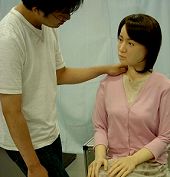
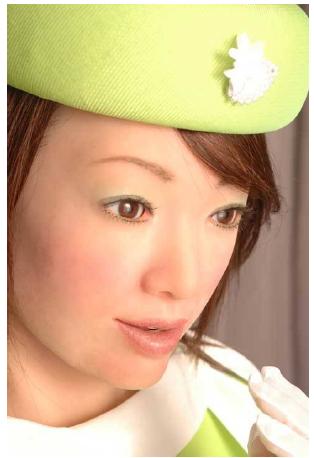
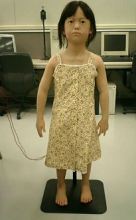
The future of edutainment and service robots... U0308283 Wu Chengyu Introduction Robots are usually designed to function optimally, be it streamlined to reduce resistive forces or having extra legs for traveling on rough terrains. But come 21st century, robots today are now deployed for a new reason – to facilitate and improve communication. To achieve this goal, robots have to have a new appearance. As psychologists have shown, robots with a human-like appearance have a stronger presence and humans are more likely to interact with them. Hence, the new generation of robots is born. Humanoid robots, with appearance and behaviour similar us, are the solutions to our new needs. Indeed, should we perfect this technology, we could be looking at a whole new range of jobs robots can help us with. This would include using robots as entertainers such as actors, performers, dancers etc or in service sectors like as a receptionists or usher or in education fields as a translator or teacher. The possibilities are endless should we be able to pass robots off as a human substitute when needed. Here, let us marvel at some examples of humanoid robots that have already been tested. Repliee Q1 & Q2 Humanoid robots Repliee Q2 and ‘her’ predecessor Repliee Q1 can be said be the closest to humans that were ever made. Whether in terms of appearance or behavior, these 2 robots were modeled as closely to humans as possible. Instead of having hard plastic as a skin, these 2 robots are made of flexible silicone to give a skin like look and texture. In addition, the two robots each have 42 actuators, allowing her to do the most minute yet smooth motions such as the fluttering of her eyelids. They can even stimulate breathing by the subtle rising and falling of their chests. Finally, these two are even programmed to shift about their positions randomly, much akin to their creators, humans. Another version of Repliees Q2 is the Repliee R1 which is modeled after a 5 year old girl instead but using the same technology. Actroids There have been several other human-like robots like the Repliees but the most significant of them will be the ones built from the Japanese company Kokoro and Advanced Media. Called Actroids, many of them have already been employed commercially especially in service. In this newest version of Actroids, a female type reception robot has been employed in an information booth. These Actroids look very much like humans but are able to recognize and respond in up to 4 different languages, making them even better than their human counterparts. Motion System To achieve humanlike motion, both Repliee and Androids or humanoid robots in general use an air compressor to power their motions. Highly pressurized air is supplied to an actuator called a cylinder to move mechanical units. Generally speaking, an actuator used for heavy machinery employs hydraulic pressure instead of pneumatic one. Mounted with 42 actuators, the Repliee and Actroids are able to move very smoothly, much like a human being. Actroids are also suited with a system to control their motions such that when making conversation, they would look at the enquirer’s face and move its lips, as though pronouncing their sentences. They may even change their facial expressions or show some hand gestures according to the context of the conversation. Although to date, most humanoid robots can only sit down and move the upper part of their body. This is due to the constraint that these robots have to be attached to the air compressor, which is too large to be fitted inside her body, hence limiting her mobility. Voice Recognition and Response System The most challenging part of creating a practical humanoid robot for interactive purposes would be to give it intelligence to recognize speeches or questions and generate an appropriate response. Let us study one of the most advance voice recognition engine present in robots today - AmiVoice®. Developed by Japanese company Advance Media Inc, AmiVoice® is currently the voice recognition engine used by Actroids. With this engine, Actroids can effectively understand and speak up to 4 different language, namely English, Chinese, Korean, and Japanese. This is done through a speech recognition check not per word, but per sentence of each speech. Such a utility is exceptionally useful when the guests could come from more many countries and hence predefining a language is unfeasible. AmiVoice® has been proven to accurately recognize the language of each person regardless of the difference in intonations and accents, high or low pitches or speaking speeds. But to be able to first hear the enquirer, Actroid must first be able to filter off the background noises and decide when someone is speaking to her. This is done also in the AmiVoice®’s noise cancellation technology which ensures the accuracy of the voice recognition. To prevent Actroid to start talking to herself, there is another echo cancellation algorithm which would prevent Actroid from recognizing and processing her own voice. Finally, as a final step to simulate humans, Actroid has a voice synthesizer system within which would generate a natural voice that’s similar to a human’s. Here is a flowchart of Actroid’s response program. Future Trends Robotics today is advancing in an amazing pace. Now, there is talk of new technology there can create a fake skin for robots, giving them not only a sense of touch but also the ability to detect pressure and temperature or maybe even humility, light, strain and sound which human skin cannot sense. There is also further progress in trying to incorporate muscles into robots, hence allowing them to move much like us. These new technologies, if successful, can be added into our humanoid robot. With a sense of touch like ours and muscles to generate an even smoother motion, robots may eventually look identical to a normal human being. We may eventually find robots acting on our tv screens or standing in front of our tutorial rooms! While this may open up a wide range of uses for us, it is still quite scary should one be no longer able to tell the difference between a robot and a human. Who or what are you? References http://news.bbc.co.uk/1/hi/sci/tech/4714135.stm http://automatesintelligent.blog.lemonde.fr/automatesintelligent/2005/08/repliee_ou_line.html http://news.nationalgeographic.com/news/2005/08/0817_050817_robotskin.html http://news.thomasnet.com/IMT/archives/2006/03/robot_muscles_double_as_fuel_cells.html

Robota Doll - An Educational Toy

U0205391 Beeharry Vishal
Toy robots have since long been viewed as entertainers for children. In the recent years, with the rise of technological motor-driven toys, a wide range of robot toys, for example AIBO from Sony and NeCoRo from Omron Corporation, have seen light. More humanoid robots, such as ASIMO from Honda and EMIEW from Hitachi, have also been added to the list of entertainment robots.
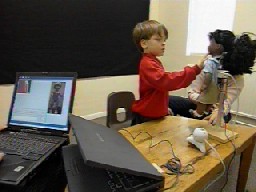
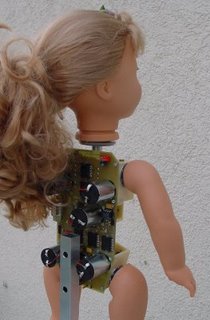
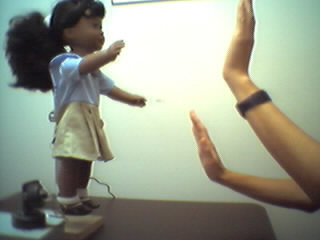
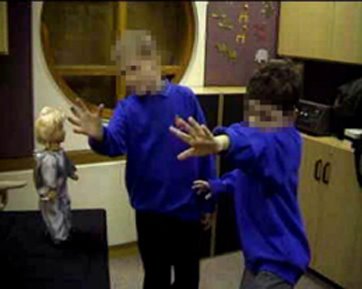
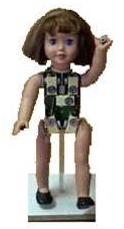
However, while being absorb with entertainment robots, one must not ignore the fact that robot toys can also be used for educational purposes. The AuRoRa project, started in 1998 in collaboration with different schools in the Hertfordshire (University of Hertfordshire) and Essex areas, including Radlett Lodge School, Colnbrook School, and Bentfield Primary school, aims at using robot toys as an educational or therapeutic role for children with autism. One of the few robots used in the project is the Robota Doll. The picture on the left shows the first prototypes of Robota.
Robota Dolls are mini humanoid robots which have been developed specifically to serve as educational toys. These ‘dolls’ are sophisticated enough to be able to have complex interactions, such as speech, vision and body imitation, with humans. They have proved to be very useful to help children diagnosed with autism symptoms.
In case many may not be aware of autism, autism is a development disorder affecting 91 people in every 10,000. Although both the cause and cure of this disorder are currently unknown, their symptoms vary from children to children. Generally, children affected with the autism syndrome tend to have behavioral problems. They seem to be ‘cut off’ from the world and, acting as an observer, they avoid social contact while finding it difficult to participate in social situations. To help these children to have interactions with the people around them, they need to be taught such interaction ‘skills’ through adults. However, adults’ social behaviors are very delicate, elaborate and widely unpredictable (which often appear frightening to children with autism). Most autism children are more comfortable with mechanical toys. This is where the AuRoRa project comes into action.
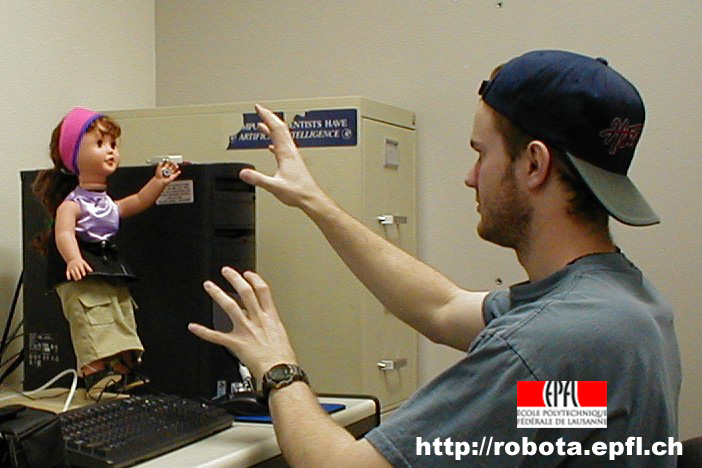
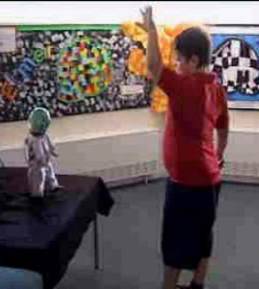
The Robota Doll serves as a robotic platform to provide a safe, simplified (as compared to the real world) and predictable environment to familiarize these children with the socialization skills. Depending on the children’s abilities, the complexity of interaction can be varied. The pictures below show how the children can get involve in imitation and turn-taking games with the robots.

Technology Robota, being a humanoid doll, stands at 45 cm high. Her arms, legs and head are made from plastic components of a commercially available doll. The motors that drive the arms, legs and the head have each 1 DOF. She can detect and respond to touch through potentiometers to detect passive motion of its limbs and head. Various sensors (emitter/receiver, light detectors, etc,) can also be connected to Robota.

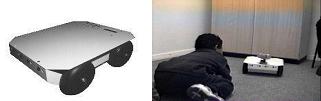
The best feature of Robota is that she can copy and imitate upward movements of the user’s arms and sideways movements of the user’s head when the latter is sitting close to the robot. Thus, the user can ‘play’ imitating and turn-taking games with Robota. Furthermore, machine learning algorithms allow Robota to learn from the user, for example, she can be taught a sequence of actions as well a vocabulary. Some of other robots used in the AuRoRa project are: (1) Mel Robot --> 38 cm long --> 30 cm wide --> 12 cm high --> 8 IR sensors --> 4 wheels (2) Pekee Robot --> Oval-shaped --> 2 motorized wheels --> 15 distance measuring sensors

In all the fields (assistive, security, home, entertainment, educational) robots are seen to have excelled beyond expectation. Though it may seem a distant future, the day where robots will be able to roam around on the streets, as “friends” with the humans, may soon arrive. To add on, who knows, maybe the scenes in the movie I,Robot can someday become reality. To conclude, below are some quotes (fro movie I,Robot):
1. “Robots don’t feel fear, they don’t feel anything”. 2. “Can a robot write a symphony; can a robot turn a canvas into a beautiful masterpiece?”
3. “The future begins today (…) more sophisticated, more intelligent, and of course, three laws safe.” 4. “One day they’ll have secrets, one day they’ll have dreams”. 5. “We all have a purpose”.

A Human-Like Semi Autonomous Mobile Security Robot

U0204840 Lin Ming Zheng
The Mechatronics Group of the University of Waikato has developed a fleet of five mobile robots capable of autonomous operation. These robots are design to move on a variety of terrains including farms, forests, underwater and smooth indoor surfaces. MARVIN (Mobile Autonomous Robotic Vehicle for Indoor Navigation) is designed to act as a security agent for indoor environments. They are able to interact with people who may have little or no knowledge of robotic devices. This interaction must be made as natural as possible in order for the human to be comfortable communicating with MARVIN. To facilitate this, MARVIN has been substantially redesigned and provided with speech recognition and speech synthesis software as well as the ability to verbally and non-verbally convey emotional states. These emotion states can include actions like nodding or shaking of the head.

MARVIN is also equipped with different sensors to allow it to avoid obstacles. Different sensors are used to detect obstacles at different distance (short, intermediate and long). In operation, MARVIN scans its environment, waiting until it has detected a dynamic (moving) obstacle. Once this is confirmed, the laser ranger can help determine if this dynamic feature is possibly a human. If so, MARVIN approaches the “moving obstacle” and interrogates it. If it is a human, MARVIN expects an identification card to be shown. It then searches its database to find the owner of this card, and will prompt the user for his password. MARVIN will try three times to elicit the password from the user. If unsuccessful, MARVIN will become more aggressive (see diagram), and demand the user leave the premises. Although not implemented at this stage, the plan is for MARVIN to also notify a remote human security agent via the on-board wireless LAN that an intrusion has taken place, and send a picture of the intruder.

I think that this system is useful as a security agent. When multiple robots are used, this can serve as an efficient way to patrol a large area. However there is still a need for a human security guard to oversee the entire operation as unexpected situations may arise if an intruder behaves abnormally.