Friday, April 07, 2006

Service Robots - Shell Smart Pump

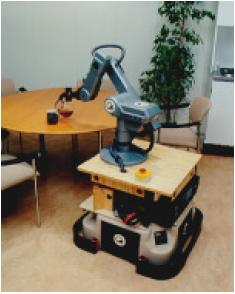
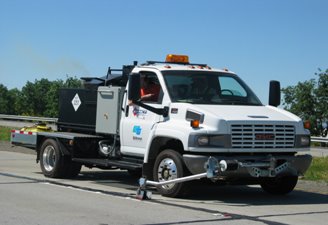
This short write-up features an updated overview of the flourishing and vibrant developments (i.e., in the industry, consumer market and the research field) related to the interesting area of service robots. Service robots assist human beings, typically by performing a job that is dirty, dull, distant or dangerous. This type of robot typically is autonomous and /or operated by a building control system, with manual override options [1]. They have applications in almost every industry – anywhere where work is repetitive, requires continuously high levels of concentration, is physically demanding or takes place in dangerous environments. Examples of areas where service robots are working, or in development, includes (i.e., but is not limited to) industrial cleaning, equipment maintenance, human domestic tasks and data acquisition. The Da Vinci robotic surgery system is a service robot, along with a whole host of other medical/healthcare robots such as rehabilitation robots, and prosthetic and orthotic devices [2]. An example of a service robot is an industrial application which International Submarine Engineering Ltd (I.S.E) designed in April 1997. It is called “Shell Smart Pump” (Figure 1). The Shell Smart Pump is a robotic system to refuel automobiles [3]. The first test site is in Sacramento California.

Figure 1: Shell Smart Pump
Shell Smart Pump provides many advantages to the motorist, the environment, and to the service station operator. It is arguably the world's most sophisticated robot development in 25 years, and will change the way society perceives robots. Shell Smart Pump is the world’s first robot that is operable by people with no training and has 11 patents that are pending. For the sake of safety, Shell Smart Pump was designed with significant sensor and control redundancy. Customers are not inconvenienced when placing an order for fuel as there is a customer control panel (i.e., customer interface) that moves to the customer. The Shell Smart Pump fuels cars regardless of which side the fuel door is located. The Shell Smart Pump is able to fuel virtually all production automobiles (i.e., those manufactured from 1986 onwards) sold in North America.
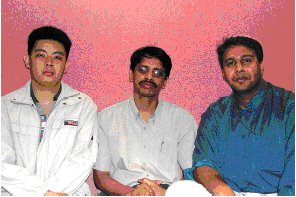
Figure 2: Robotizing Lives. Founders of Robhatah: Mr Tan Shin Jiuh, Dr Prahlad Vadakkepat and Mr Janesh Janardhanan
Many interesting initiatives and developments related to service robots in the research arena. I have discovered a company (i.e., named ‘Robhatah’) in Singapore that is specially founded to cater to people’s needs in the service industry. Robhatah is a robotics consulting and manufacturing company [4]. With a view to developing revolutionary robotic solutions for the emerging mass markets, Robhatah was founded in December 2003 by a team of engineers at the NUS Centre for Intelligent Control under the guidance of Dr Prahlad.
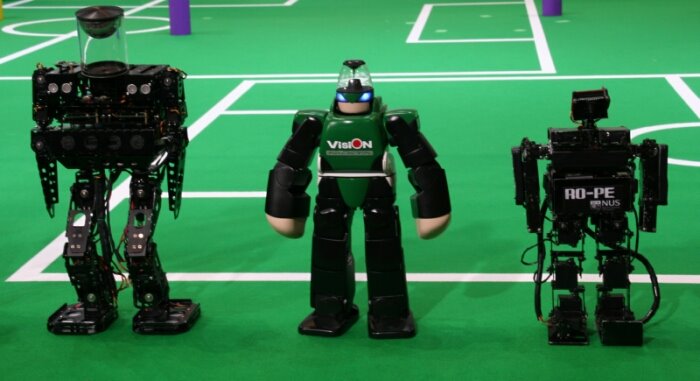
Advances in embedded technologies are finally making consumer goods a reality. Recent research results show an emerging personal and service robotics market surpassing US$20 billion by 2010, and US$90 billion by 2020 [4]. Robhatah is pitched at gaining significant consumer mindshare in these emerging markets. Robhatah is currently marketing two award-winning robotic research platforms – a humanoid robot and a robot soccer system – catering to the research robotics market. The humanoid robot, Manus-I, retails for $25,000 while the robot soccer system is marketed at $13,000. Robhatah also markets a biped research platform targeted at the research community dealing with biped and humanoid robotics.
Manus-I has carved a name for itself by winning the first places in International Humanoid Robot Competitions twice in a row. Organized by the Federation of International Robosoccer Association (FIRA), the competitions are dominated by Manus-I in 2003 (Austria), in 2004 (Korea) and in 2005 (Singapore).
More interesting and emerging trends related to service robots will be added to this site in due time. Do always come back to check them out!! Good day!!
References [1] Wikipedia, the free encyclopedia (Service Robot) http://en.wikipedia.org/wiki/Service_robot [2] Robotics Market http://www.robonexus.com/roboticsmarket.htm [3] ISE Group of Companies - Smart Pump http://www.ise.bc.ca/smart.html [4] FOE – Annual Report 2004/2005 http://www.eng.nus.edu.sg/ar/2004/11.htm

Thursday, April 06, 2006

Rehabilitation Robot Brings Hope

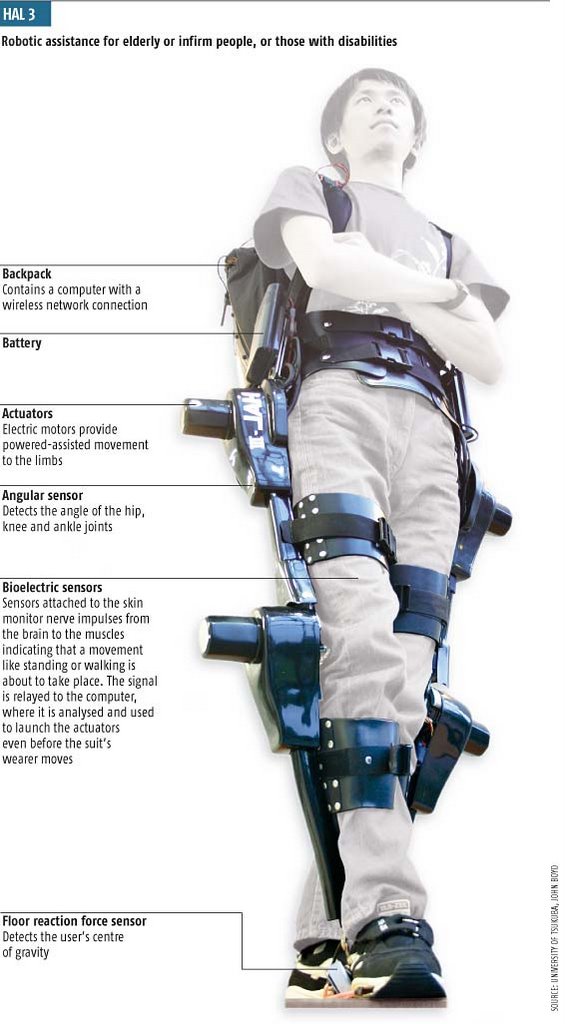
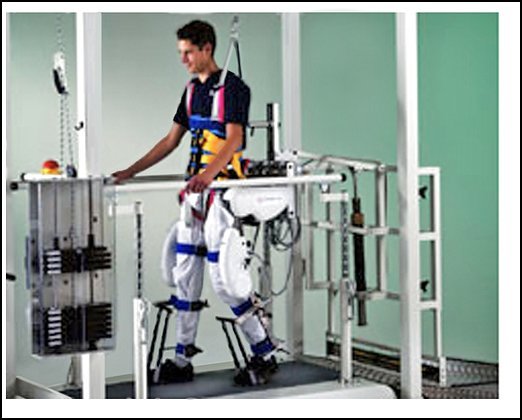
Amazing robot suit -- HAL A robot suit HAL (hybrid assistive limb) has been developed that could help older people or those with disabilities to walk or lift heavy objects. HAL is the result of 10 years' work by Yoshiyuki Sankai of the University of Tsukuba in Japan. http://www.newscientist.com/article/mg18624945.800.html As we know, the muscles of human body move according to the signal transmitted from human brain. In HAL, a "bio-cybernic" system uses bioelectric sensors attached to the skin on the legs to monitor signals transmitted from the brain to the muscles. This can be done because when the brain is transmitting some signal to the muscle, a detectable current is generated at the surface of skin. This current is picked up by the sensor and sent back to the computer. This current is then translated to some other signal which can be recognized by the controlling system and used to control the electric motors at the hips and knees of the exoskeleton. The motors at the hips and knees can respond to the signal in a fraction of a second. In fact, it responds even faster than the muscles do. That is why it can help the human body move so efficiently. As we can see from above, the bio-cybernic system controls the movement of the individual parts of human body such as hips, knees, feet, etc. The coordination of these movements is mandatory. Therefore, a second control system is used to provide autonomous robotic control of the motors to coordinate these movements and make a task easier overall, helping someone to walk, for instance. This system activates itself automatically once the user starts to move. The first time they walk, its sensors record posture and pattern of motion, and this information is stored in an onboard database for later use. When the user walks again, sensors alert the computer, which recognizes the movement and regenerates the stored pattern to provide power-assisted movement. These two control systems interact with each to complete the task. The actions of both systems can be calibrated according to a particular user's needs, for instance to give extra assistance to a weaker limb. Lokomat – savior of paralyzed people A robotic device that may help people with paralysis to walk again was unveiled for the first time in the United States at the Rehabilitation Institute of Chicago. This robotic device is called Lokomat. It gives hope to people with paralysis by retraining them to walk as shown in the picture. http://www.bookofjoe.com/2004/12/behindthemedspe_15.html Lokomat consists of a powered exoskeleton robot. It delivers power to the hip and knee of a person whose legs are strapped to the machine. This device suspends the patient in a harness over a treadmill, while a robot helps swing the legs. The computer synchronizes the treadmill with the body's pace. This repetitive training in movement may help the gait pattern generators thought to be located in the lumbar area and might, in time, help patients redevelop and regain functional walking patterns. Lokomat offers people with paralysis other benefits as well. For instance, regular therapy helps prevent limbs from deteriorating, by strengthening muscles and bones. Also, weight-bearing exercise helps individuals with paralysis to ward off the threat of osteoporosis. http://www.nbc5.com/health/6003254/detail.html# http://www.hoise.com/vmw/01/articles/vmw/LV-VM-12-01-12.html

New developped horse-like robot in US army

http://www.bostondynamics.com/dist/BigDog_Feb-26-2006.wmv Just watch it in internet, impressive. the robot walks just like the real horse and could rejects the external disturbance such as push or kick by a mature male. Just share with you guys. Anybody gets an idea what control method used by them to make the robot keep balance perfect like real animals?

Big Dog

http://www.bostondynamics.com/dist/BigDog_Feb-26-2006.wmv Reference page: http://www.bostondynamics.com/content/sec.php?section=robotics Please watch the short vedio first. The robot so called 'big dog' is amazing, which is created by Boston Dynamics, USA. Besides the big dog, the institute also creats RHex,Little dog,RiSE,and much more great robotics, which can be found in the reference website with vedio. Definitely, it can be applied widely, not only for exploring. The Most Advanced Quadruped Robot on Earth BigDog is the alpha male of the Boston Dynamics family of robots. It is a quadruped robot that walks, runs, and climbs on rough terrain and carries heavy loads. BigDog is powered by a gasoline engine that drives a hydraulic actuation system. BigDog's legs are articulated like an animal’s, and have compliant elements that absorb shock and recycle energy from one step to the next. BigDog is the size of a large dog or small mule, measuring 1 meter long, 0.7 meters tall and 75 kg weight. BigDog has an on-board computer that controls locomotion, servos the legs and handles a wide variety of sensors. BigDog’s control system manages the dynamics of its behavior to keep it balanced, steer, navigate, and regulate energetics as conditions vary. Sensors for locomotion include joint position, joint force, ground contact, ground load, a laser gyroscope, and a stereo vision system. Other sensors focus on the internal state of BigDog, monitoring the hydraulic pressure, oil temperature, engine temperature, rpm, battery charge and others. So far, BigDog has trotted at 3.3 mph, climbed a 35 degree slope and carried a 120 lb load. BigDog is being developed by Boston Dynamics with help from Foster Miller, the Jet Propulsion Laboratory, and the Harvard University Concord Field Station.Development is funded by the DARPA Defense Sciences Office.

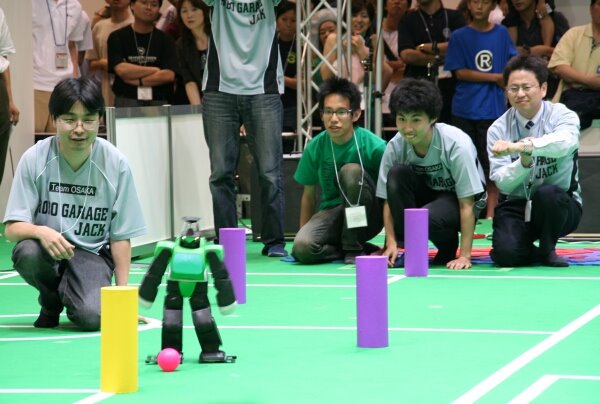
RoboCup Humanoid League – what is it all about?

“Ladieees and gentlemen!! We have year 2050 now and are going to witness the first in the universe match between the best players of our planet and the team of the humanoid robots... no grandpa you don't need to tune your hearing aid I really said robots!! Who fifty years ago would think it will really happen? …”
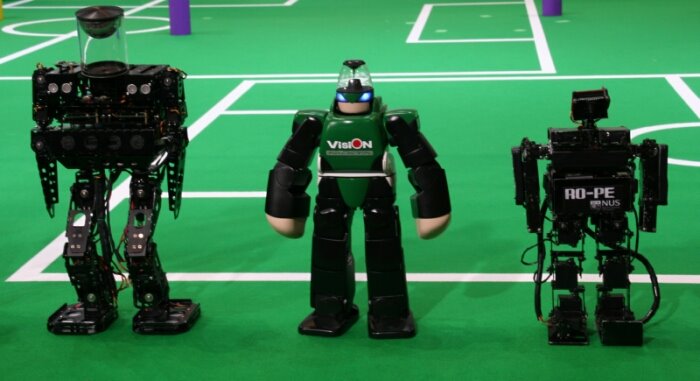
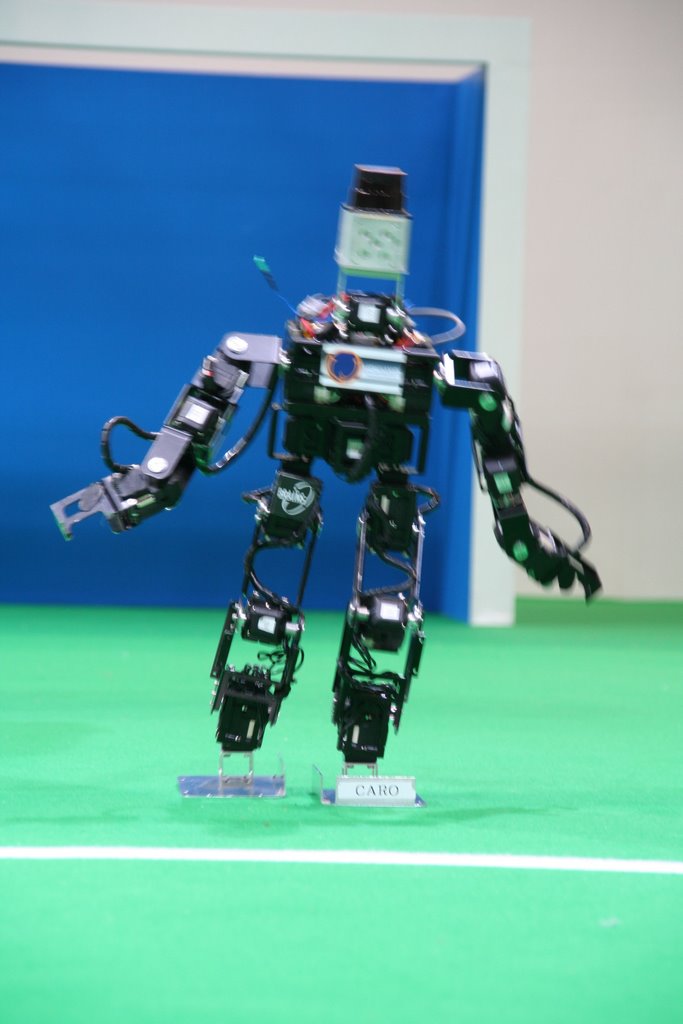
Short introduction The official goal of the RoboCup[1] initiative is: “By the year 2050, develop a team of fully autonomous humanoid robots that can win against the human world soccer champion team.” The project entails development of soft computing, sensor-fusion, robotics and other related branches of science. Thanks to the clearly specified goal which is far beyond the contemporary science abilities it can bring many innovations applicable in industry as well as in social live.
Main constrains:
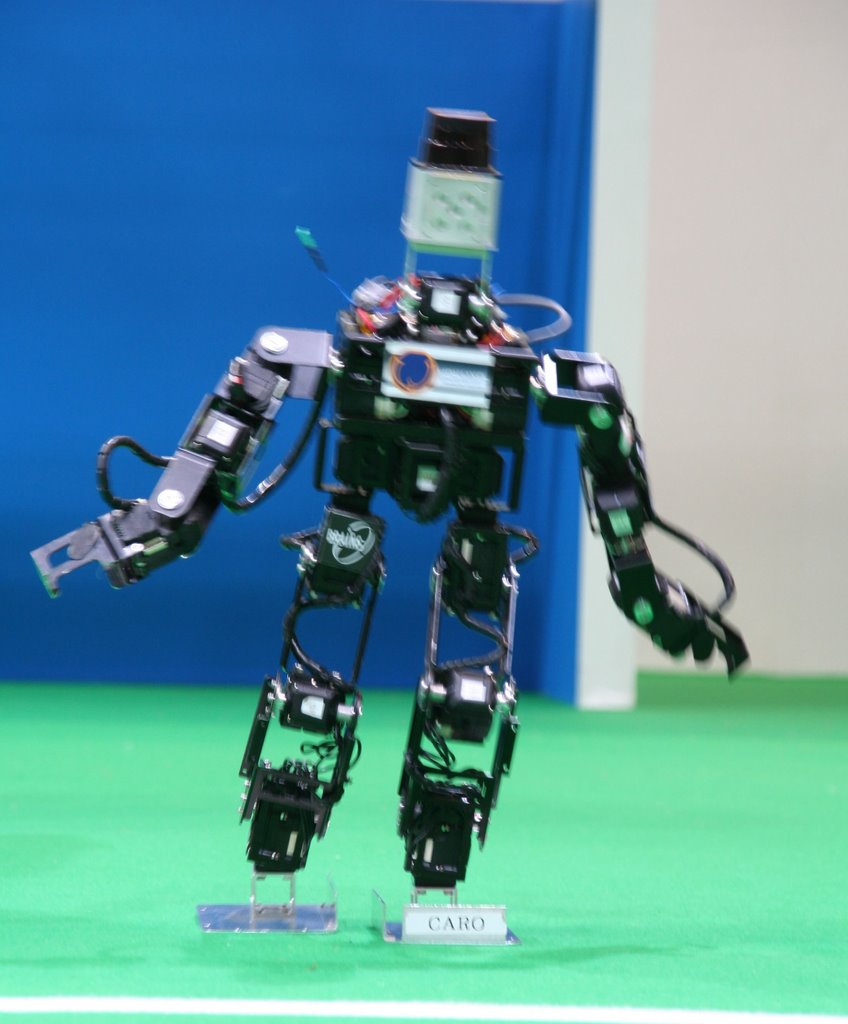
- the robot proportions should be as close as possible to that of human being (exactly specified in rules[2]). - each of the implemented sensory systems must have its equivalent in human being. Only the vision and audio sensors are allowed for localization and all the environment recognition purposes (no infrared, radar and ultrasonic sensors are allowed). In addition, these sensors should be mounted in places of their equivalents in human being.
Main challenges:
- real time vision recognition – the robot in order to play soccer must be able to localize and track the play ground, goals, global localization as well as the exact posture of other players and finally the ball. - dynamic gait – in order to be able to speed a human being robot must be able to run, what by its definition enforces use of dynamic gait. - multi-agent systems – as soccer is team game the cooperation between team members is crucial for winning the game. The particular agent must know its position and function in the whole game.
Current stage:
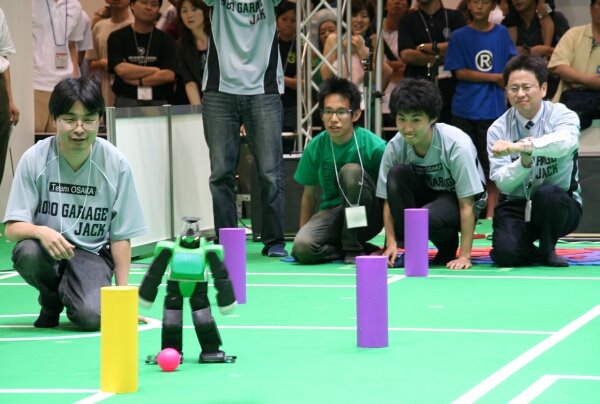
During the last competition in Osaka 2005 robots have been divided into two size groups and had to face such events as: penalty kick, 2 vs. 2 and technical challenge. In upcoming competition in Germany there will be additional ball dribbling and ball passing events. These interested can find the rules here. After reading this blog you surely have a lot of questions. I have done it on purpose! Perhaps you think the final game will never take place or it is waste of money to do research in this area. Don't hesitate just write it in comments!!
Source:

You will never bang into anything again

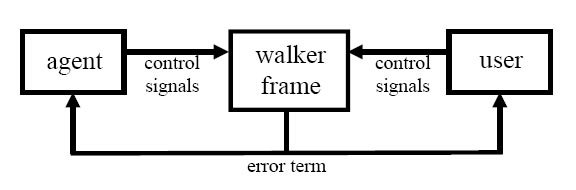
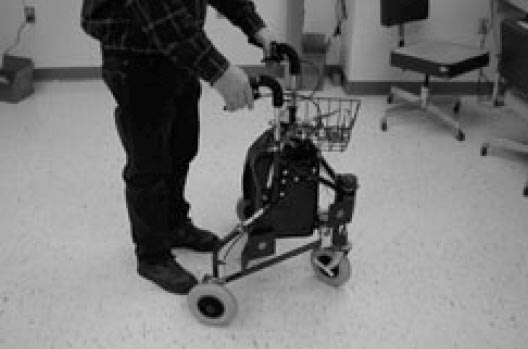
As we are moving towards an aging society, healthcare for the elderly has gained more importance. The use of assistive robotics technology would enable significant saving in term of expenditure in healthcare for the elderly. At the same time, it would help to improve and enhance the daily life of the elderly. However, the idea behind this is not to replace the ability of the user but to enhance it. The assistive robotic walker is one such robot designed to improve the daily life of elderly. It main function is to improve the ease and safety of the pedestrian travels of elderly user. In other words, it prevents the elderly from knocking into obstacles and falling down that might result from sudden change in terrain. However, it does not serve to replace the user’s ability to walk but merely act as a tool to assist the user in walking. The assistive robotic walker is developed based on a three-wheeled frame rollator. Sonar, infra-red sensors, and motor system to steer the front wheel have been installed. An automatic braking system has also been installed. Input to the walker is obtained via the sensors installed in the handles, in which the different in force applied by the user to the two handles are sensed. Both the user and the agent are able to control the walker frame and both are able to observe the results of the action taken. One important feature of this walker frame is that, it cannot move without the implicit consent of the user and so move on its own. Hence, the control in this robot is not hierarchical. The walker’s design can be said to be passive, cooperative, and submissive. It is passive because it has no forward drive motor. Therefore, in order to move forward, it relies on the user for motive force. With that, it allows the user to move at his or her own pace, thus giving him or her feeling of control. The walker is said to be cooperative because it tries to infer the user’s path and based on this information, to decide on how to avoid any obstacles in the path of the user. It is submissive because the walker would monitor if the user resisted the actions selected by the walker. If this is the case, the movements will be adjusted. This cycle continues, until the user agrees to the action selected by the walker.
  • How does the frame walker infer the path of the user?

The frame walker made use of a path inference algorithm to infer the intended path of the user. At each step, the walker estimates the probability that the user is traveling on each of the possible arc from its current position by assigning a weight to each of the paths available. One question may pop up from your mind? What if the user turns the frame walker in place? Through that, he or she could in fact move to any point in a straight line. However, the frame walker is designed in such a way that, it assumes that the user usually do not operate the rollator in such a way. Most of the time, the walker is moved in a non-holonomic style. All the motions are a combination of translation and rotation, in other words and arc. How much weight to give to each path is depending on the orientation of the walker. Paths are first weighted by the orientation of the walker. If the path translation component is the same direction as that indicated by the walker sensor, more weight would be given to that path than its opposite component. When the walker is at rest, more weight will be given to path in front of the walker. Next, the paths are weighted by length. In the beginning, longer paths are given more weight. Paths are then weighted by a history of the user steering input. Additional weight will be given to paths that are similar to the arc traveled in the last time step. The walker would select the path with the highest weight. The sensors in the walker allow it to monitor the difference in force applied to both handles. When more force is applied to one handle, the walker will turn in the opposite direction. The amount of translation and rotation would be determined by the difference in force applied. If the difference is large, there would be more rotation and less translation. Equal force on both handle would mean that the walker would move either forward or backward. What happen when the path selected by the walker does not corresponds to the desired path of travel of the user? In this case, the agent would reduce the weight of paths near the direction of the wheel orientation. At the same time, the agent would increase the weight of path around the direction indicated by the user. The action taken by the agent helps to prevent the user from falling or knocking into obstacles. However, in the event of danger, the walker would override the commands issued by the user. Other than that, under normal situation, the user would be in control.

  • Obstacles Avoidance

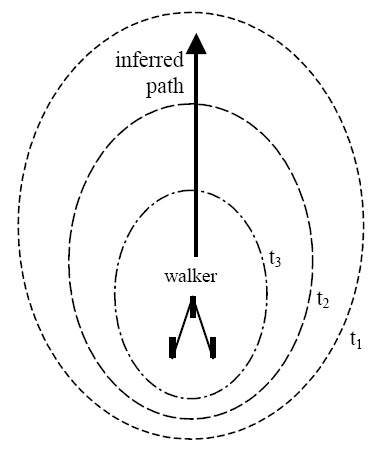
Obstacles avoidance can be broken down into three levels. If the user is relatively near to the obstacle (distance t1), the walker would try to steer away from the obstacle. If the user get closer to the obstacle (distance t2), the walker does not have enough distance to steer away. At such, the brake of the frame walker will be activated slowly, proportional to the walker. However, if the user gets very close to the obstacle (distance t3), the brake will be engaged fully.

Despite the ‘goodwill’ of the walker to prevent the user from knocking into an obstacle, one problem arises. What if the user needs to go near the kitchen to wash hand? (That is to get near to the obstacle at a distance less than t3) Well, in this case, there is no choice. The user will have to step out of the walker.

Wednesday, April 05, 2006

Who will be my sidekick?

Who will be my sidekick? Bust out your robot dance move now, because it may become obsolete. Researchers at Purdue University and the Advanced Institute of Science and Technology in Japan are attempting to make humanoid robots move more like real people. The aim is to create less mechanical-looking motion and to design robots that can combine basic movements to perform tasks they have not specifically been trained to do. "If robots are to become assistive to people, then they need to have the fluidity and flexibility that humans have," says Howard N. Zelaznik, a professor of health and kinesiology at Purdue University and a researcher on the project. "For example, imagine that a tennis ball hits a bad piece of grass at Wimbledon. How does the performer quickly and fluidly change their stroke?" Employing the same type of equipment used to create human animation in movies, the team will put sensors on certain parts of people's bodies, such as their arms and legs, to monitor human movements in three dimensions. This way, they can track how people learn to perform simple tasks. They will then try to map these models onto robots. "People will make straight-line movements with timing goals, circular movements with timing goals," Zelaznik says. "For example, your task is to draw a 10-centimeter circle and complete the movement exactly in 400 milliseconds. They learn to make these movements with the correct durations. We're going to see whether we can instantiate [that] learning onto robots." The sensors the researchers will use consist of small plastic markers that house coils of wire and a magnet in the center of the area where the humans' movements are tracked. When people move, the coils of wire traveling in the magnetic field will produce electrical currents. A computer can read the information by perceiving changes in the electrical currents caused by the motion. The National Science Foundation's Information Technology Research program is funding the effort with a four-year, $900,000 grant. For now, Zelaznik says the robot is purely a research device, and the project's success will dictate its future. But advances in humanoid robot technology may come at a particularly opportune time, since a surge in these robots is expected. The United Nations Economic Commission for Europe's (UNECE) 2004 World Robotics Survey, released October 2004, predicts a large increase in humanoid robots in the next few years. UNECE forecasts the worldwide market for industrial robots will swell from 81,800 units in 2003 to 106,000 in 2007, an annual growth rate of about 7 percent. One of the most well-known humanoid robots is Honda's ASIMO, a semiautonomous astronaut-looking creation that greets guests at the Honda plant in Tokyo and has toured the U.S. Kawada Industries in Japan recently introduced the HRP-2, a humanoid that can lie down and get up. Zelaznik says Purdue and the Advanced Institute of Science and Technology are trying to come up with something different from the rest. "In the past, robots have performed very straightforward tasks," he says. "What we think is novel is that we're trying to create a humanoid that can perform tasks it has never been trained to do." Zelaznik is now collaborating with robotics expert George Lee, a professor of electrical and computer engineering at Purdue, and says, "The combination of our expertise is going to be quite exciting." Now let us look at currently what Japan has achieved in aspects of modelling human beings? Robot vs Man in Virtual World An Eagle Digital System was used for a demonstration of a real robot fighting with a real man in a virtual world. The University of Tokyo's Nakamura & Yamane Laboratory demonstrated their intelligent humanoid robot, UT-u2. The Eagle Digital system was used as the "eyes" of UT-u2. Motions of the real man, captured with the Eagle Digital system, were exported to UT-u2. The robot has his own brain (consisting of a unique processor and software, called "Animato Core") which recognized the position and motion of the man. UT-u2 then counterattacked the man in the virtual world, based on real world information http://www.motionanalysis.com/images/movies/robotexhibition.mpg Download the video(41M), for the exciting fight. Suggest use netransport or net ants with 10 connections. Less than 3 minuates in NUS intranet. From the video, we could observe. (1) The robot is reactive. It will perform counteracting action once detecting attacker’s position and motion. (2) It punches like real human beings and promptly (3) It will not actively attack the opponent unless it is attacked. From all those features observed, the future version of the robots could be used as the potential body guard required by those need 24/7 safeties, such as elderly group, children, political leaders. The advantages of the body-guard robots: (a) It is almost invulnerable to any form of physical attack from human beings (b) It could detect the incoming bullets, laser beam, and other form of attack with the embedded sensors, and block those perceived as danger objects with its metal made-up body. (c) It will not actively attack unless it perceived being attacked The disadvantages or potential problems: (a) Ethical issues. If a human being is killed or injured by the robot, who will be in responsibility, the owner, or the robot itself. Who will be punished? (b) Cost. Such an intelligent robot will definitely be costly. Is it easy to be widely accepted? (c) The extreme case when the robot loses control. To what extent, the robot should be assistive is still an open issue under discussion. Robot should be a machine just simply following the preset program or should be given chance to develop into having thinking ability on which many issues would rise up?

REPLACEMENT ARM, GOOD AS NEW

Think all of us watched Star War before and love it very much. Had you notice what Luke Skywalker and his father Darth Vadar have in common besides their common bloodline? Yes, both of them have a robotic arm. Over the pass years, scientist had done extensive research to realize this robotic arm, hoping that they will be able to produce this robotic arm which is very much similar to native limb and is controlled directly by brain or neural system. Recently, Scientists have had a string of remarkable successes in taking signal from the brain of monkeys and men, and using them to move mechanical arms, which means this dream is about to come true. The article I read is about a current research of Defense Advanced Research Project Agency (DARPA), the Pentagon’s blue-sky research division, which is to develop “naturally controlled artificial limb that will restore full motor and sensory capability to upper extremity amputee patients. This revolutionary prosthesis will be controlled, feel, look and perform like the native limb.” The main feature of the limb they are developing is that it is wired directly into the peripheral nervous system, instead of the brain-controlled arms being demonstrated today. Under the agency guideline, the arm will need enough fitness to pick up a raisin or to write in longhand; it needs to be sensitive enough for the wearer to handle day-to-day tasks in the dark; and to be strong enough to lift 60 pounds at a time. Breakthrough research in “neural control, sensory input, advanced mechanics and actuators, and prosthesis design and integration” will be needed. Neuroscientists, roboticists, engineers, occupational therapists, and surgeons in the neural, orthopedic, reconstructive subspecialties will have to chip in and work together to realize the dream. Darpa claim that they will get the robo-arm ready -- in four years or less. ....................to be continued......................... Reference: http://www.defensetech.org/archives/001478.html http://www.shadow.org.uk/products/newhand.shtml

REPLACEMENT ARM, GOOD AS NEW #2

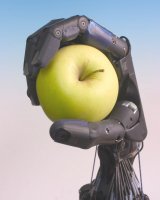
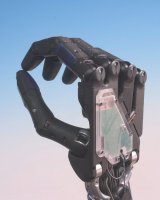
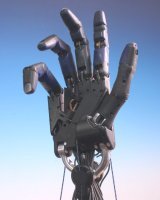
............ Continued...................... There are institute who concentrate in developing the Mechanical hardware of the hand, The Shadow Robot Company has introduce Shadow Dexterous Hand which they claim is the worlds most advanced Dexterous hand and intend to produce a limited number of second generation prototypes for sale to research and development organization and other interested parties. Technical Specification: Actuation: The Hand is driven from a block of Air Muscles mounted behind the Hand on the "forearm". Pneumatic valves and initial control software are provided. Unless otherwise stated, the joints are driven by an opposing pair of muscles, permitting variable compliance at the joint; however, some of the finger joints are driven by a single muscle with return spring. Fingers: 4 degree of freedom Thumb: 5 degree of freedom Wrist: 2 degree of freedom Strength: Wrist : 1.5Nm Distal : 0.5Nm Proximal : 1.0Nm Materials: Fore Arm : Steel Palm : Acetyl / Aluminum Finger : Acetyl, Polycarbonate, Aluminum, Polyurethane skin If such robotic arm is to be introduced, it will be good news for those who lost their hands or legs during Accidents, losing arm will no longer be the end of normal life for them, they still can get their arm replaced with robotic arm and live a normal life. Reference: http://www.defensetech.org/archives/001478.html http://www.shadow.org.uk/products/newhand.shtml

AIBO Robots

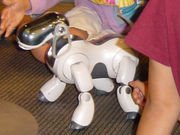
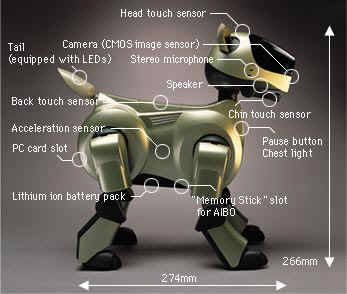
Most of you must have heard about Sony AIBO, but I guess not many know what its features are and the technology used to implement it. So what exactly does AIBO stand for? Basically it just stands for Artificial Intelligence roBOt, or simply “companion” in Japanese. Just like us humans, it goes through life cycle stages of an infant, child, teen and adult. The rate at which it grows up is dependent on the amount of interaction that we have with it. The greater the amount of the interactions, the faster it grows up and the converse is true. Behaviours This new pet has six different emotional states and some instincts that are preprogrammed into its brain. Some of the emotional states include happiness, dislike, anger, love, sadness and surprise and instincts such as fear, search, movement and recharge. The emotions that are exhibited by it have different degrees, for instance, it will express its emotional state through a series of actions such as wagging his tail and changing the colour or shape of its eyes, etc. In addition, it acts to fulfill desires that are created by its instincts. This means that if we, as the pet owners, fulfill what it wants, its joy level will rise. Otherwise, it might get angry or sad over the issue. So does it not behave like a child! On top of these, its personality and growth are greatly influenced by how we react to its emotional expressions. All these emotions and instincts that are expressed by it are dependent on the nervous system that has been planted in it. And when it is “hungry”, it will exhibit certain behaviours so that the owner will know that it is time to recharge the battery. Technology AIBO is powered by battery and it acts like a fully autonomous robot where decisions for its own actions and behaviour are made independently. This is made possible with the nervous system that is made up of integrated circuitry which results in it being a fully cognizant, sensing, loving and communicate companion. There are two types of softwares that are used in the AIBO and these are available separately. The first software, Life AIBOware allows AIBO to be raised from a puppy to a fully grown up adult while it goes through the various development stages based on the interaction that the owner has with it. The second software, Explorer AIBOware is used when the owner wants it to understand the 100 voice commands though it may not necessarily obey the given commands. AIBO is a four-legged robot has 20 motorized joints which allow its movements to be rather realistic. In addition, the 20 degrees of freedom that it possesses allows it to perform trick such as wagging its tail and flapping its ears just like a real dog. It behaves like a real puppy as it initially starts to move wobbly but will learn to balance itself as it grows up.
AIBO has various senses such as touch, hearing and sight. The sense of touch on his head, chin and back allows it to respond accordingly to how the owner treats it such a friendly pat or a disciplining tap. The built-in stereo microphones on its ears which allows it to recognize the owner’s instructions and responds to it since it learns the name the owner gives it. In addition, it will copy the sound of the owner’s words and reply with an electronic tonal language. However, an infant can only recognize only a limited set of vocabulary. But as it matures, it can recognize more words. The camera on its head allows it to recognize its surrounding at all times. It has three sensors – temperature, infrared distance and acceleration – to allow it to adapt to its surroundings at all times. In terms of application domains, making use of the features that the AIBO has, a RoboCup autonomous soccer competition had been held. This involves a team of programmed AIBO robots to play autonomous soccer games against other competitors. In retrospect, it brings much companion for us humans as it acts like a real dog. This AIBO also helps to inculcate the correct values to children that they should not be nasty to animals as it will react accordingly to how we humans treat it. In addition, it also helps one to learn how to take care of a pet so as to prepare them if they want to keep a real one in the future.

Tuesday, April 04, 2006

KineAssist - A physical therapist's tool

For most stroke patients, physical therapy (PT) plays a very important part in the rehabilitation process. A physical therapist uses training, exercises and physical manipulation of the patient's body to restore a sense of balance, coordination and movement, enabling the patient to relearn simple motor activities such as walking, sitting, standing. In this process, the utmost priority of the therapist is safety of the patient. However, this concern for safety can sometimes get into the way of progress, particularly in the case of reteaching the patient to walk. This may sound counter-intuitive: safety hinders the healing process? In actual fact, the process of walking involves throwing oneself off balance on one leg and then catching oneself again on the other leg. And it is found that making mistakes in this process and learning to adapt to it enables the stroke patient's brain to rewire itself around the injury. However, such mistakes can be very dangerous to the patient as they may injury themselves further when they fall.
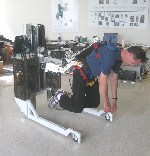
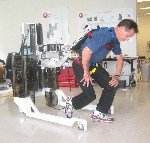
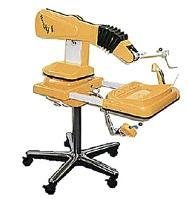
As such, a robot called KineAssist designed by Chicago PT aims to allows stroke patients to make mistakes safely, resolving the physical therapist's conundrum. The robotic technology is able to sense or anticipate the intended movement of the patient, and follow accordingly. This robot was designed not to interfere, only catching the patient if he lost balance, but to provide enough assistance so as to enable the PT to perform other tasks. The arms and harness on the robot enables different degrees of support to be given to the patient depending on their ability to walk. In the initial phrase of relearning to walk, the robot might support all of the patient's weight and move slowly forward. As the patient gets stronger, the physical therapist can program the robot to let the patient bear more weight and the perform more challenging exercises such as moving in kicking a ball. In even later stages of the therapy, the robot can nudge patients off balance to help them learn to recover their balance. All these are performed under a safety net as the robot is able to sense when the patient is starting to drop and is able to stop a fall. "The need to hold on to patients to prevent them from falling interferes with PTs' abilities to use their hands more creatively and intelligently to help a person learn to move better," explained Dr. Brown. "We've created a way for clinicians to perform challenging interventions for patients with balance and walking disorders. Clinicians can challenge their patients while providing safety."

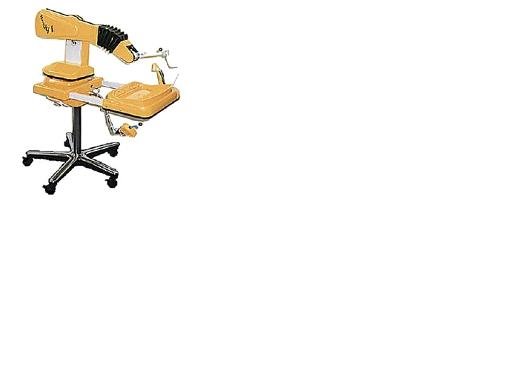
The pictures show a person being caught by the KineAssist and his recovery from the fall.

References:

http://www.chicagopt.com/ http://www.technologyreview.com/articles/05/09/issue/forward_rehab.asp

Monday, April 03, 2006

CyberBug UAV (Unmanned Aerial Vechicle)

Wang Huiwen Karen U0204982
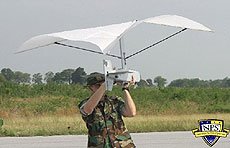
CyberDefence Systems's Cyberbug(TM) has the capability of providing routine surveillance and communication in crowded or remote locations. The CyberBug(TM) is a scalable unmanned aircraft that weighs between 2.6 to 14 pounds, which is approximately between 1.18 and 6.35 kilograms and could provide camera solutions for both day and night vision. It has the ability to fly on station in programmed or manual mode at speeds of 30 miles per hour for up to an hour with camera footprint 300x300 depending on day or night. The system is truly unique in that the control station is based upon XP/Visual-Basic software. The CyberBug(TM) does not require extensive instruction, technical backup or pilot training to operate and is capable of rapid deployment where it can be assembled by an individual and launched in 30 seconds.
This UAV is designed for both military and security surveillance. Because of the fact that the CyberBug(TM) is a silent vehicle, this battery-powered UAV could fly undetected into a hostile environment. The CyberBug(TM) allows users to view the data captured by sensor from a wireless product to any place in the world, thus providing a low cost solution to surveillance. This UAV has proven its capabilities with its successful deployment on Sunday April 17 2005 for the Charles County Sheriff's Office to monitor the 12th Annual Southern Maryland "Blessing of the Bikes" event held at the Charles County Fairgrounds in La Plata. It was utilized as a surveillance vehicle to observe crowds for unruly behaviour, accidents and traffic problems within the area.
Recently Feb 01 2006, Cyber Defense's CyberBug(TM) was chosen to complement the Gaston County Police Department. The UAV's intended applications were to provide military ground forces with immediate and efficient surveillance from the sky. However, there are also ongoing testing and real-time demonstrations which are creating new possible uses for the CyberBug(TM). Search and rescue, traffic control and expanded investigations are a few of the possible uses for the CyberBug(TM). The CyberBug(TM) could serve to identify and track down possible threats to the environment such as forest fires or as security measures to deter crop tampering. The previous methods of tracking and surveying are accomplished mainly with multiple patrol cars, planes or helicopters, and all of which come with high maintenance and much greater expense. Several CyberBugs(TM) could be used in their places, offering faster and cheaper surveillance over a wide area of terrain. This allows forestry experts to distinguish possible environmental threats immediately, gaining accurate topographic information and reducing potential threats to the area.
In addition to that, the CyberBug(TM) had been presented as a security solution for the U.S. military in Iraq where the person monitoring for hostile activity could be located in the US but with the ability to notify forces in Iraq of potential areas of concern, providing control of the cameras as well as the operation of the vehicles.

I find that this Cyberbug(TM) is a great innovation especially with its capabilities to move area places undetected and mostly importantly it is a cost effective solution. As compared to the usual bulky surveillance vehicles, this UAV is lighter and easier to deploy with minimal instruction. Therefore, I believe that in future to come, it would serve to provide more solutions for Gaston County Police Department. However, i think it would be better if the CyberBug(TM)'s battery is able to last for a longer duration since some remote places would need a longer time frame to comb.

Handy1-Rehabiliation robot for the severely disabled,helping you to eat and drink and brush and even do make-up!

U0204951-Xu Lixia The greatest benefits of robots are to be able to help those who are not able to take care of themselves. The ones who need robots most are those who are severly disabled. Eating meals might seem a "taken for granted" ability of humans beings, but what about those with cerebral palsy ?Cerebral palsy as you may wonder what it is, it is a broad term that describes a group of neurological (brain) disorders. It is a life-long condition that affects the communication between the brain and the muscles, causing a permanent state of uncoordinated movement and posturing. Thus patients with this disorder would not be able to control their movement. And needless to say, they will even have problems with the most basic ability of eating their own meals. So here comes their saviour-Handy1 Structure of Handy1 Handy1 consists of a Cyber 310 robotic arm with five degrees of freedom plus a gripper. A PC386 motherboard which was housed within the base unit of the Handy 1 was used to programme the movements for the system .A single switch input used in conjunction with a linear scanning control system was used as the user interface so as to cater for different disability group. Handy1 consists of three slide-on tray sections(eating/drinking, washing/shaving/teeth cleaning, and cosmetic application) that are detachable. A controller based upon PC104 technology was inbuilt in Handy1 so as to ensure that the design could be easily upgraded.The controller consist of a special input/output board that has the capabilities of voice recognition, speech synthesis, inputs for sensors, joystick control and stepper motor drivers. The tray sections are rested on runners attached to the Handy 1 and are connected electrically through a sixteen pin socket built integrally into the Handy 1 base unit. This makes it possible for the system to recognize up to fifteen different trays. There are feedbacks via potentiometers built at the joints of the Handy 1 so as to allow automatic referencing on start-up. The eating and drinking tray is also include features like automatic referencing on power up, positional feedback, error correction during operation and helpful speech prompts for users .This greatly increase the user friendliness of the system and break down language barriers. Eating/Drinking Tray In Handy 1, there is a scanning system of lights in the tray section. The user can select the food from any part of the dish. Once the system is turned on and food have been put into the walled columns of the food dish ,the series of seven lights will then begin to scan from left to right behind the food dish. What the user have to do now is to wait for the light to scan behind the column of the food that he/she wants to eat and then press Handy1 to set it into motion. The robot will then move on to the selected food and scoops up a spoonful of the selected food and then deliver it to the user mouth position. One point to note is that the user can remove the food at his own speed. The whole process will repeat itself till there are no more food left in the dish. To allow user to be able to have a drink, an eighth light is implemented into the tray. Washing/Shaving/Teeth Cleaning Tray In here, the robot can be used to pick up a sponge, bring the sponge into a bowl of water,soak the sponge and then squeeze out the excess water.Ina ddition,the robot can also apply soap to the sponge and then bring it to the user’s face position. After washing, water rinse and warm air dry options are available to the user for him/her to complete the task. In addition, an electric shaver and toothbrush and a drinking cup to rinse out the mouth are all integrated into the robot design. The user can pick up all these items and use them in any order. Both the shaver and toothbrush can be controlled and positioned at several parts of the face or mouth, allowing effective shaving or dental hygiene to be carried out. Cosmetic Application Tray In this tray, several cosmetics such as eye shadows, blusher and lipsticks can be chosen by user. The concept of how Handy1 works here is the same as that of eating. When Handy1 is switched on, a series of lights besides each of the cosmetic types will start to scan from left to right. When the light beside the cosmetic that is required is lit up, the user will then press on the switch and Handy1 will then choose the correct applicator and applies the correct amount of blusher or eye shadows etc. After which the robot will then place the applicator at the suitable face position whereby the user can apply the make up. Therefore from the above, we can see that Handy1 really can become a handy tool and it does can help severely disabled people to eat meals or brush teeth and even can help ladies to put up make-ups to make them pretty. Reference "AN OVERVIEW OF HANDY 1, A REHABILITATION ROBOT FOR THE SEVERELY DISABLED" by Mike Topping BA Cert Ed and Jane Smith BA Hons http://www.dinf.ne.jp/doc/english/Us_Eu/conf/csun_99/session0059.html

Source of the picture:aut-bscw.hut.fi/pub/bscw.cgi/ d1597/Assistive%20Robotics.ppt

Robovolc - A robot for volcano exploration

Pang Sze Yong U0204779 Pang Sze Yong U0204779 The Robovolc is a robot developed jointly by Università di CATANIA (ITALY), Istituto Nazionale di Geofisica e Vulcanologia (ITALY), Institute de Physique du Globe de Paris (FRANCE), University of Leeds (U.K.), ROBOSOFT (FRANCE) and BAE Systems (U.K.). The main objective of developing this robot is to reduce the risks volcanologists need to face in their study of volcanos. During the paroxismal phases of eruptions, the data that can be collected from volcano vents are of the greatest interest and use to scientific understanding of volcanic activity. Unfortunately it is also the most dangerous period as well. There have been cases of volcanologists who have died or suffered serious personal injuries while trying to collect these data. The challenges faced in the project is to coordinate the various partners and foster cooperation. Due to the multi-disciplinary nature of this project, expertise from different areas are brought together, such as volcanologists, software, communications and robotic platforms experts. Over three years, the project was developed stage by stage with milestones and objectives to ensure that progress was on time. Firstly, a common understanding between the needs of volcanologists and financial constrains on the project has to be established. The problem to be tackled is carefully defined and requirements also laid out. The robot was to be based on a modular design and in the second year, the details of each subsystem were fleshed out and development work is started. An important result during this year is the decision on the method of locomotion. The robot was to be a wheeled vehicle with a highly adaptive chassis. In the third year, integration plans were drawn and continuously updated. The various subsystems were brought together one by one for integration and testing. Firstly, the wheeled platform was constructed. It is integrated with the motion control board and wireless radio link modules. Next, the construction of the SCARA manipulator and gripper was completed. The first version of the software to control navigation of the robot platform and manipulator was then released and tested. The required sensors were purchased and tested in integration. The sensors were also integrated with the manipulator and gripper to ensure compatability. Finally the complete robot is tested in laboratory before field trials. The Robovolc was successful in the field and due to its modular nature, several new modular parts were swapped in to improve the robots functionality in different situations. Many photographs and videos of the robot in the field and laboratory are available on the website for viewing. Reference : http://www.robovolc.dees.unict.it/

The Unmanned Aerial Vehicle - The Cypher

U0205109 Wu Jinjia

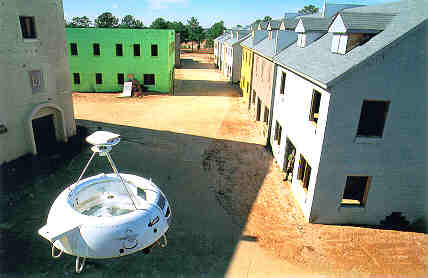
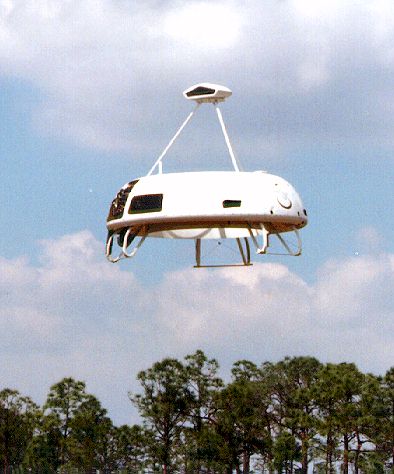
The Cypher is a remote control helicopter for military surveillance. This Unmanned Aerial Vehicle (UAV) is 6.5 ft diameter. It has hover capability and can endure three hours of flight when powered by a 50-horsepower class engine. It can even land on slopes of as much as 15 degrees. The Cypher can operate autonomously according to preplanned mission scenario. It is able to fly “hands-off” instead of being flown directly by a ground operator. It has the following autonomous flight modes:

  • auto take-off and landing
  • position hover-hold
  • altitude hold
  • velocity hold
  • waypoint navigation
  • auto return home

The Cypher operates on ducted rotors incorporated with composite structures. The enclosed rotor concept is safer than exposed UAV rotor systems as it minimizes the hazard of exposed high speed blades to ground personnel. The composite structures include the bearingless rotors, fly-by-wire flight controls, and advanced avionics. It is easy to operate and utilizes a centralized computer, called the vehicle mission processor, for execution of flight control laws, vehicle management functions, navigational computations, flight payload management and air vehicle communications. The rotors and the circular shroud surrounding them will share in providing the lift. It combines the efficiency of a ducted air stream with a coaxial advancing blade concept rotor system The Cypher determines position and navigates using a Global Positioning System. The vehicle is controlled and monitored from an integrated mobile ground station. The entire mission can be planned, executed and monitored from a single system manager display. Vehicle and payload commands, from the system manager, are relayed to the aircraft via a digital telemetry uplink. Aircraft status, mission data, test data and payload video are merged into a single data downlink signal that is transmitted to the control van. The underground control is done through a datalink. The Cypher has numerous flight demonstrations in both military and civil applications. They include ground and naval surveillance, communication relay, countermeasures missions as well as such non-defense roles as counter-narcotics, ordnance disposal, forestry, utilities, law enforcement and search and rescue. In a demonstration at the Military Operations in Urban Terrain (MOUT) site at Fort Benning, Ga., Cypher flew down streets, landed on a building's roof and strategically placed different payloads. For the U.S. Army's Autonomous Rotorcraft Testbed (ASRT) program, Cypher – with no operator input – searched and tracked man-size targets. For the U.S. Department of Energy, Cypher used magnetometers to search and locate underground structures and tunnels in Nevada. In September 1997, Cypher flew at the Army's Force Protection Equipment Demonstration in Virginia. So far this air vehicle has already accumulated about 400 flight hours at Sikorsky’s Development flight Centre.

References:

http://cache.ucr.edu/~currie/roboadam.htm http://www.globalsecurity.org/intell/systems/cypher.htm

Sunday, April 02, 2006

Road Cracks Sealing Robot

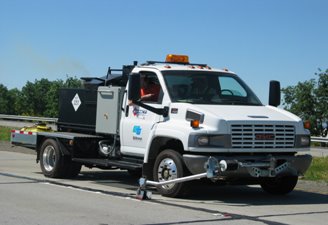
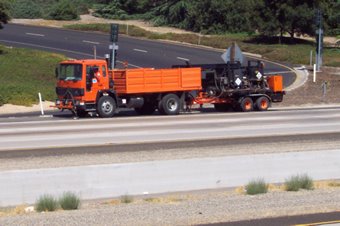
U0307717 Chew Jian Qiang To all fellow drivers/passengers, have you ever been stuck in a traffic jam so long that your bottom aches, you nearly concussed from Carbon Monoxide inhalation or you wish you had some magic to shrink all the other cars and roll over them? And the traffic jam was due to a lane closure for road repair, which lasted a few days. If the road was not repaired, then there might be no road to repair! Well, Advanced Highway Maintenance and Construction Technology(AHMCT) has the solution to those very annoying road repairs lasting a whole day. But before that, I shall state the perils of road repairs. Everyday, workers lay their lives on the road by manually repairing the cracked road, seperated by less than 1.5m between traffic speeding at 90kmh (sometimes much higher). All it needs is a moment of distraction, or a drunked driver, to claim that life. And it is not only for a day. Manual road repairs require a lot of time, and may drag on a few days for the same stretch of highway. More time spent on road = more chance of workers hit by speeding cars. Enter the Transfer Tank Longitudinal Sealer (TTLS). --> This is an evolved version of the Longitudinal Crack Sealing Machine (LCSM). (Below) This machine consists of a long robotic arm equipped with visual sensors, which sends information to the driver. The operator can then, from the comfort and safety (and aircon) of his seat, communicate with the machine through a simple user interface. The operator just needs to position the arm over a crack on the road, and the machine will take care of the rest. The arm will then take over, tracing and sealing the fissure on its own while the driver drives alongside it, monitoring the activity from the safe confines of a large truck. Another machine is the Operator Controlled Crack Sealing Machine (OCCSM).

How It Works:

Sealing A special sealant applicator that deploys a pressurized reservoir is developed to allow for high speed sealing operations and automation. This means, a reservoir of sealant is place over the crack, and then pressure is applied to ensure that the sealant moves to fill up the crack. Since the sealant reservoir must be kept at a constant level (so as to fill up the crack regardless of the crack depth and width), the sealant pump output is regulated with a reservoir level feedback controller constantly maintaining the set reservoir level regardless of crack demand. This application technique has proved to be successful, completely filling up cracks at a speed of 8km/h. Vision System As stated, there were visual sensors on the robotic arm. This provides real-time images of the workspace for crack detection and path planning. The images are routed to the operator, where he will be able to get them by simply opening a browser (not unlike your internet browser). Motion and I/O Control System

The motion control system handles the two-axis (R-θ) motion of the telescopic arm. This node of the distributed control network is a stand-alone 2-axis motion controller with a built-in 100 Mbps fast Ethernet port. The I/O subsystem controls the pump of the sealent melter, the heaters, and the sealent head lever. It is also a stand-alone controller with 100Mbps ethernet port. Unlike the motion controller which can store and execute customer programs, the I/O controller uses a memory map for customizing temperature alarms and events which are used to control the heaters, and customizing a PID loop to control the pump proportional to the head level. All these critical tasks are conducted by the controller and real-time is ensured.

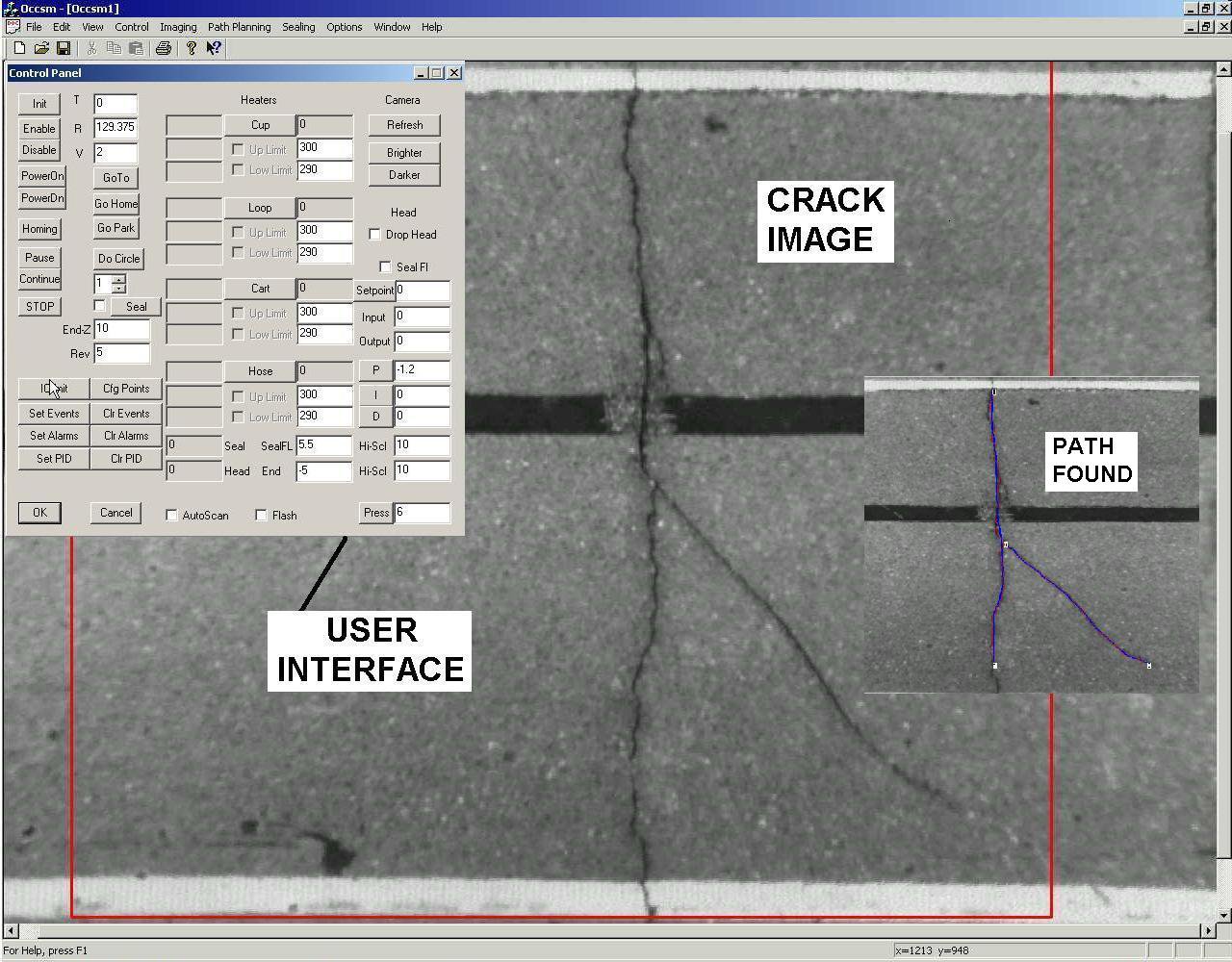
User Interface

Programmed in Visual C++, the user interface can be run on any PC, provided ethernet/Wi-Fi connection is available. The software is developed such that it is object-oriented and multithreaded, which makes the graphical interface rich in features (required by complex systems such as this), and always responsive (important for real-time control). This user interface allows the operator to perform all controls to the machine.

Path Planning

The graphical interface makes path planning interactive and allows many other functions. The operator can choose from a whole list of methods for finding the path. He can even combine the methods, and such flexibility allows the him to find the path for virtually any crack, effectively and accurately. Since fully automated crack recognition is time-consuming and not dependable, the operator can interfere and point out the start and end of the crack, avoiding the necessity to scan the whole image. A C++ program makes use of this to find the entire crack, only the start and end points of the cracks are needed as inputs. Raw paths from free hand and some other planning methods are normally not smooth which can result in jerky motions by the telescopic arm (for sealing). These jerky motions will lead to rough seals. The system encompasses curve fitting to smoothen out the edges. Nice.

Control Panel

The control panel is a modeless dialog box, meaning it is always on screen, but permits other user activites on the main window. Because of this, the operator can control and monitor the system within the control panel and do other things such as path planning within the main window. The entire user interface is always unblocked (top of screen), so the operator always has control of the system. This is very important for real-time control programming. In cases of emergencies, it is of utmost importance that the operation can be stopped immediately, especially when the machine is working adjacent to traffic.

Conclusion

The implementation of the cracks sealing robots has proved beneficial. I don't think such technology is in use in Singapore yet. However, from the statistics, this will prove much more efficient and cheaper (and less annoyance to road users) in the long run.

Statistics: (LCSM vs Manual)

No of employees: 3(LCSM), 4(Manual)

Avg miles/day: 3.5(LCSM), 0.8(Manual)

Bare Rate Cost: $4017(LCSM), $23820(Manual)

Road Closures: No(LCSM), Yes(Manual)

Employees on foot?: No(LCSM), Yes(Manual)

I hope someone from LTA reads this and use this wonderful system to alleviate the sufferings of motorists. Haha. Save $$, Save Time, Save Lives. How wonderful is that!

References:

http://www.ahmct.ucdavis.edu/index.htm?pg=HomePage

http://www.its.berkeley.edu/itsreview/ITSReviewonline/spring2003/trb2003/bennett.pdf

http://www.wired.com/news/technology/0,1282,48196,00.html

Insect in Exploration

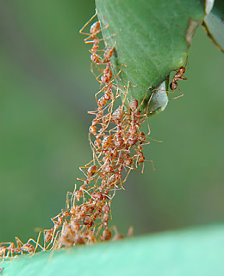
U0204593 Chiam Lee Chuan “AN ARMY of 1000 millimetre-scale robots capable of exploration and inspection work in hazardous environments is to be built under a €4.4 million European project. The I-SWARM (Intelligent Small World Autonomous Robots for Micro-manipulation) project, which is coordinated by Jörg Seyfried of the University of Karlsruhe in Germany, will involve 10 European universities. The bots will probably consist of a microchip with six or eight legs. They will get power from solar cells and communicate with their comrades via infrared or radio links. This should allow them to be sent into small or dangerous spaces to inspect equipment for signs of damage. A team of entomologists from the University of Graz in Austria will provide advice on ways to mimic insect communication. The researchers hope to have prototypes capable of pushing small objects around by mid-2006.” Quoted: NewScientist.com news service, 24 September 2005 The above mentioned project is actually a research field in which Biomimetics can be applied in the area of explorations. Biomimetics, though is a relatively new word, is a term used for those engineering systems that make use of traits observed in biology especially the behavioral patterns of insects. In recent years, scientists are studying how insects walk, fly and navigate their ways around obstacles to develop super, tiny robots that could led in the advances of biomimetics robotics. Perhaps some of us are not alien to the biomimetics term as the concepts have already been featured in science fiction works, from the ever-complaining Marvin in Hitchhiker’s Guide to the Galaxy to the murderous nanomachines in Michael Crichton’s Prey. Scientific researches are now focusing its attention on gathering answers to how insect can function in such exquisite ways. How does a fly manouever with such precision, a bee find its way from flower to hive or a cockroach move so quickly? At the same time, the swarming behaviour of ants, bees, termites and other social insects has implications far beyond the hive. Modeling the swarm behaviour provides researchers with new conceptual frameworks for extending the field of artificial intelligence and suggests new possibilities for computer hardware and software design. Why mimic insects and its swarming behaviour for exploration purposes? Using insects to model our robots held several advantages over the current convectional built-for-exploration robots. One of the greatest strength of insect robots is its locomotion and miniature size. Using cockroach as an example, it is shaped in such a way that both speed and stability can be achieved during movement over uneven surfaces. The secret lies in the self-stablising posture, achieved through a low centre of mass located toward the rear of the animal and by a wide base support and a thrusting leg function in which the legs acts mainly as thruster rather than striders, launching the insect forward. In flight, we marvel at the extraordinary maneuver ability of the bee.An engineer once calculated, infamous, that an aeroplane with proportionally the same weight and wing size would never get off the ground. To defy the steady-state principles of aeronautics, the bee uses a combination of three aerodynamics techniques to fly and to perform their astounding aerobatics. In exploration, one of the utmost important areas is navigation. In nature, one of the best navigators around is the bee. From the detail studies of the Australian scientists, we now know that the bee uses the sun as a compass for flight direction. At the same time, it stores the information of the places it has been to and recalls this on their return flight by making connections between the landmarks and the hives. Another important strategy we can adapt from insects behaviour is the goal-achieving method of a purely-bottom up approach with no central command and control structure. A swarm of termites for example exhibits a collective intelligence that far exceeds the intelligence of any individual termites. There is no big “boss” in charge and no individual insect grasps the big picture. Yet, it can accomplish a collective goal that best serve the interest of the community. For exploration, such decentralized system might be more suitable that a centralized one in terms of robustness and flexibility. The loss of a multi-billions exploration project would be minimum if the communication link of an agent in a multi-agents system is lost as compared to the single centralized agent system. Already, there are researching groups planning and implementing robotics insect for explorations. Notably, the NASA is exploring the idea of having 10,000 electronic-mechanical bugs with four to six legs of the size of a large beetle on a distant planet. Each tiny bug will be fitted with sensors and cameras to relay information back to earth. Piezoelectric ceramic technology is used for efficient power generation. Currently, each prototype cost $100 but a mass-produced bug should only cost as little as $10. While there are still plenty of issues to be ironed out, the depth and scope of planet exploration is more promising than the convectional strategies. In another gound-breaking project, Dr. K.M. Isaac, professor of aerospace engineering at UMR, is working with NASA, The Ohio Aerospace Institute (OAI) and Georgia Institute of Technology to create a robotic flying machine called an Entomopter. The mechanical insect, capable of crawling as well as flying, will be able to study, videotape, photograph, and gather other types of information about planets, specifically Mars, closer than any current technology, “Scientists hope to send these robotic bugs to Mars by the end of the decade”, he adds. This technology is not only applicable to space exploration, but also to disaster-struck areas like unclear accident. In deep-sea exploration, NASA's Institute for Advanced Concepts (NIAC), are coming up with this new idea of robo-swimmers which models after a seahorse. In this case, seahorse is chosen as it can swim against ocean currents and use their tails to grab on to something and remain stationary. While we have seen many of these ideas in fiction books and movies, the potential of exploration-designed mechanical bugs fitted with sensors and cameras is certainly very real. Who knows someday we will might be looking at Mars from the eyes of a bug. Reference: http://www.spacedaily.com/news/mars-robot-02b.html http://www.cis.plym.ac.uk/cis/InsectRobotics/Applications.htm http://www.science.org.au/nova/084/084key.htm

Rehab Robots at your service..

U0206727 – Rajen Suchede Right.. Before I kick off into the actual robots discussed in this blog, let me try shedding some light into the two themes core to this article – rehabilitation and robotics. As defined by the Oxford dictionary, rehabilitation is an activity which aims to enable a disabled person to reach an optimum mental, physical, and/or social functional level. A robot (yeah, we all know what it is but do we know how the Oxford dictionary defines it!) is a mechanical device that sometimes resembles a human and is capable of performing a variety of often complex human tasks on command or by being programmed in advance. Hence rehabilitation robotics deals with advancing robotics technology to provide the physically disabled people with tools to improve their quality of life and productivity of work. Traditional industrial robots have always been programmed to follow a particular structure and sequence to accomplish a series of repetitive tasks. An example of such robots are those used in car manufacturing which need to do the exact same thing for every car each time, without any dynamic change in control. However, rehab robots require a lot more than being programmed to do a series of step-by-step tasks since we have an actual man–machine interaction. This poses a difficult challenge to the designers since these robots should now be able to interact with “anyone” and be dynamic enough to adapt to each different individual. Moreover, while designing such robots we need to keep the safety aspect in mind. Hence, there is not much point in preprogramming these robots. What is needed is an increased amount of sensors to guide the robot and increase their performance and develop separate devices to control the robots. What’s more difficult now is that these devices should be operable by the people in rehab. Hence most designers work at rehab centers so they can test if the rehab patients are able to properly grasp and control the robots. Right, moving on to the actual robot I intend to discuss in this blog – WALKY. There have been a lot of robots that were developed to help disabled people in the office environment. However, what they didn’t realize is that people with disabilities are neither interested nor competent in administrative work. The WALKY is designed for help the disabled in a laboratory environment. In the lab, this robot can be used to carry out the mechanical tasks such as moving test tubes etc, leaving the more qualitative for the people to perform. This same robot can use many individuals working in adjacent locations to perform the same tasks. Have a look below and you’ll get a better idea: I personally feel that WALKY has a great future as an assistive device for people with disabilities. The possibilities are infinite. Forget for a moment that it was developed for use in a laboratory environment. Tweaking the codes a bit, we can use this same robot at home say help out with chores at the kitchen, opening the refrigerator and getting you a drink. What would make an interesting discussion is what price can one pay for such an assistive device and thinking of ways to making the most out of it. Leave your comments.. References: [1] “WALKY – Mobile robot system for rehabilitation”, Gunnar Bolmsjo, Online: http://www.robotics.lu.se/publications/1995/bolmsjo95b/HTML/node10.html [2] “Sesor-based navigating mobile robots for people with disabilities”, Hakan Neveryd, Center fir Rehabilitation Research pp. 1-84.

Robot for the removal of brain tumours

U0307654 Lian Weiwen, Mervyn

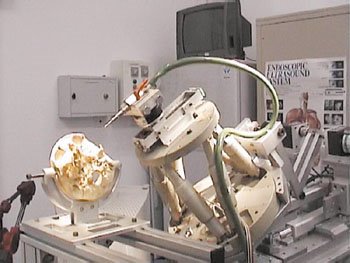
Currently in the medical field, skull surgery to remove brain tumour is a delicate and tedious operation that lasts for an average of 9 hours. It requires 6 hours to drill through the skull and 3 hours to remove the tumour. Moreover, such tumours can be extremely invasive. Thus, their removal is extremely complicated. Furthermore, there may be a need to drill through the temporal bone which is porous and not solid. This increases the complexity of the surgery. Lastly, if the surgeon damages sensitive areas (like the inner ear and facial nerves) of the patient during surgery, it may lead to permanent distortions of the facial features of the patient. Therefore, doctors in this field face a lot of difficulty in performing these operations. (Picture from http://it.asia1.com.sg/specials/spotlight20030108_004.html) However, a robot has provided an answer for them! In a joint collaboration between the department of mechanical and production engineering of NTU and the National Neuroscience Institute (NNI), Singapore experts have designed what is believed to be the first robot that is capable of drilling through the temporal bone to remove tumours during surgery. In addition, it is also capable of drilling through the other parts of the skull to remove deep-seated brain tumours. The six-legged computer controlled robot is called Hexapod. With its advent, it is able to shorten operation time to 50 percent. Furthermore, it is also capable of higher precision drills on the skull of the patient. This has translated to a saving in time and an increase in precision. Before the operation, high-resolution magnetic resonance imaging (MRI) scans are done on the patient to obtain information on the location of the sensitive areas of the patient. Such locations vary from patient to patient, so the path that the robot has to take to reach the tumour differs from patient to patient. After this information is obtained, the information is loaded onto a computer to determine the best route to reach the tumour. This route has to avoid the sensitive areas of the patient and has also got to be the shortest route. Next, the robot has to be programmed to take the route that has been planned for it. This program is written on a Linux platform. Besides these, the computer connected to the robot is capable of being preloaded with information obtained from the MRI scans to do a simulation of the actual surgery. This means that there will be greater safety in the procedure because the simulation can be run first and errors can be spotted before the actual surgery. Lastly, the surgeon places physical markers on the patient’s head to guide the robot during the surgery. Currently, trials have been successfully completed on cadavers and trials are being done on animals. In the technology used, there is a high level of accuracy involved. Thus, there is a need to ensure that the control circuitry has to be extremely precise. The controllers have to be well-tuned for movement of the robot and the drilling process. It appears that in this application, the concepts of locomotion and obstacle avoidance have been implemented to enable the robot to avoid the sensitive areas and to move towards its goal, the tumour. In this robot, there seems to be little autonomy. However, this is understandable because in medical applications, if the patient has to pay a high price due to a bug in the software, it would be disastrous. It would have a severe implication on the field of robotics as critics would jump at the opportunity to argue against further research in such a field. Moreover, the feedback from the sensors given to the doctors operating the robot ensures a greater amount of safety in the procedure being performed. Clearly, this robot is a boon to mankind in the field of medical applications. It has helped us to save time and effort. In addition, it has given us greater confidence in executing intricate and delicate medical procedures. Indeed, humans deserve better!

References: 1. http://it.asia1.com.sg/specials/spotlight20030108_004.html 2. http://virtualtrials.com/news3.cfm?item=1879 3. http://www.theage.com.au/articles/2003/01/15/1042520663224.html 4. http://www.smh.com.au/articles/2003/01/15/1042520673704.html

Do you want to buy a home robot?

U0204569 Tan Wen Pin
.
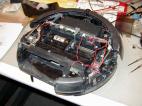
. Dread doing the housework after a hard day at work? Is the floor dusty and the carpet smells musky? The solution is here! Join over 1.2 million Roomba owners who have discovered the smarter way to clean. Get a Roomba 4230! At only USD$329, you can programmed Roomba to vacuum your floor and clean your area anytime including the time you go to sleep or go to work! Roomba has a low-profile design that fits under your bed, sofas, and other tight spots where conventional vacuums can’t reach; guaranteeing you a more automated cleaning experiences ever! With sensors, an close feedback loop to the processor controls the movement! Watch the demonstration in the link provided!
.
.
Be surprised by the robot’s intelligence! Its sensors can navigate between walls and furniture legs and adjust for carpet, tile, and wood floors. Be surprised by its virtual wall mechanism that can establish invisible perimeters for vacuuming specific zones by using well defined sensors and internal "area-specifying" algorithms. Fully battery powered, the docking station is easily accessible by the Roomba with a click of the finger. With Roomba, indoor household chores now become a breeze!
.
.
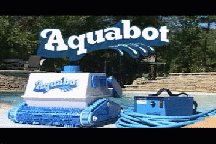
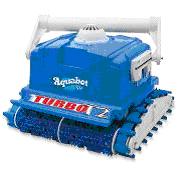
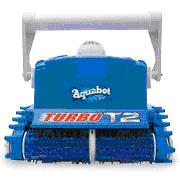
Now what happens if the swimming pool walls get dirty? Get AquaBot! AquaBot is a robotic pool cleaner that scrubs, vacuums and filters any pool in length from floor to waster line. Using an complete computer guidance system to systematically move around the pool, power water jets and rotating scrubbing brushes loosen debris on surfaces down to two microns, 1/50th the width of a human hair. The filters’ large capacity and microscopic cleaning capabilities results in a healthier pool with fewer bag changes and less backwashing. The cleaner can be set to run autonomously, controlled by routine movement instructions by a mini processor. By simply looping of movement instructions, the robot coordinates between its wheels, scrubbing action and clearing actions. A customizable digital timer also allows you to personalize the clearing schedule. For a limited time only, it is now going at USD$1499. If you produce NUS matriculation card, you will get 90% off. OK, just joking.
.
.
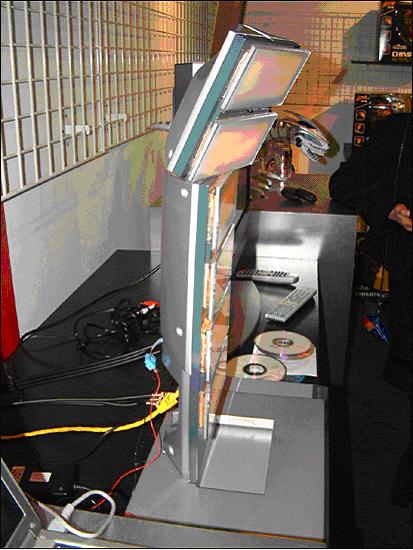
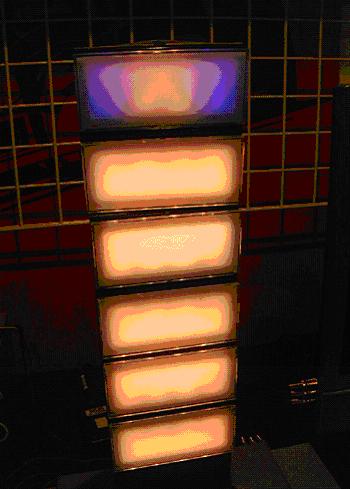
Enough for all the cleaning, its time for rest and relax! Get our SCOTY which stands for Smart Companion Operating Technology. Alright, our robot here does not clean, nor does it walk, roll, or make disgusting noises but it greets you, read your email aloud and even play your favourite tune! Standing at two feet tall, it consists of ABS plastic metal frame with a series of illuminated rectangular panels. The two uppermost panels are articulated so that the integrated camera can watch every angel of the room. Built as part of a joint venture with Philips Electronics, SCOTY is designed to be intelligent media hub. Although it has little internal intelligence inside its metal body, it relies mainly on connected PC software. The software provides facial recognition, text-to-speech and media management. By industrial pre-programming "speeches" and "words", SCOTY becomes an articulate piece of masterpiece by matching the word to its database. Anytime you need a piece of music, or want the stock updates, and you are too lazy to get up from that crouch, just “ask” SCOTY and it will read out for you ! Double up as a remote babysitter and surveillance unit. It can scan a room and detect human faces through face recognition software. It even sends an image captured with its video camera and capture video at 10 frames per second. All of the above at the price of USD$399 (Excluding PC)! What are you waiting for! .
.
Be prepared to be amazed by our technology gadgets! Embrace technology! If you do not keep up the pace, you will be thrown behind! Do not be afraid of the fast pace of technology advancement, remember that the ultimate aim is to bring about greater convenience and automation for you, a human!
.
.